
Panels

100-amp vs 200-amp electrical service: what your home actually needs

A 200-amp service is not automatically better, and 100 amps is not automatically too small. The right size is a load calculation, not square footage.

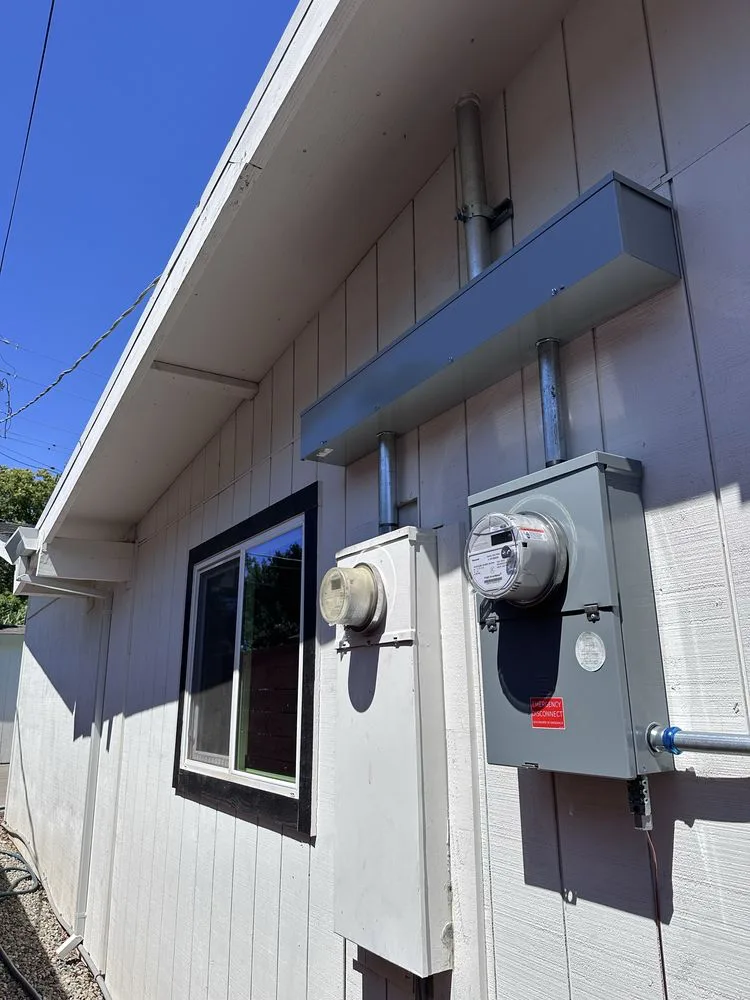
100-amp meter-main on a Sacramento house

Available 24 hours

Licensed C-10 · CSLB #1115460

Emergency electrical
10 sections
  1. At a glance
  2. 100A enough?
  3. Toward 200A
  4. EVs and electrification
  5. Load calculation
  6. Panel vs service size
  7. Load management
  8. Replace vs upgrade
  9. SMUD specifics
  10. When to evaluate

A 200-amp electrical service is not automatically better for every house, and a 100-amp service is not automatically too small. The right size is a load calculation, not a square-footage guess. For many Sacramento-area homeowners, the real question is whether the existing service has enough capacity for the house now and for the electrical loads they expect to add next.

100A can still be enough. 200A is not automatically better. The right size is a load calculation — not square footage, not the number of breakers, and not “200A because that is what everyone gets now.”

100A vs 200A at a glance

The service rating describes how much current the home’s electrical service equipment is designed to handle. A typical modern residential service is 120/240 volts, single phase.

Question100A service200A service
Typical fitSmaller home, modest electric loads, gas heat/water/cookingSeveral large electric loads at once
EV chargerPossible if the calculated load leaves capacityMore headroom; still not automatic
Same as the panel enclosure rating?NoNo
Decided byLoad calculationLoad calculation
Service ratingApproximate capacity at 240V
100AAbout 24 kVA
125AAbout 30 kVA
150AAbout 36 kVA
200AAbout 48 kVA

Those numbers are not the amount of power the house continuously uses. They describe the service’s maximum rating. Electrical codes size a service from a load calculation because household loads do not all operate at full power at the same time, which is why simply adding every appliance’s nameplate rating together usually gives the wrong answer.

Is 100A service enough?

Sometimes, yes. A 100A service can still be adequate for a smaller home with relatively modest electrical loads, especially where major appliances remain gas-fired — gas space heating, gas water heating, gas cooking, no EV charger, no spa, no large workshop equipment, and conventional household lighting and receptacle loads. In that situation, 100A may be completely workable, and it is not out of code simply because it is not 200A.

The problem begins when the house becomes substantially more electric. A service that was reasonable decades ago may have little remaining capacity after several major loads are added.

100A starts becoming restrictive when the home has — or is about to add — several large electric loads: Level 2 EV charging; an electric range or induction cooking; heat-pump HVAC or a heat-pump water heater; electric resistance heating or an electric dryer; a spa, hot tub, or sauna; workshop or large air-conditioning equipment; an accessory dwelling unit or substantial home addition; multiple dedicated 240V circuits; or solar-plus-battery equipment that requires service changes. No single item automatically means the service must be upgraded. The issue is the combined calculated load.

What pushes a home toward 200A?

A 200A service becomes more attractive when the home’s electrical demand is growing in several directions at once. A common example is a house transitioning from gas appliances to electric equipment: a heat pump, a heat-pump water heater, an induction range, an electric dryer, and an EV charger. Each individual project may be manageable. Together, they can change the service calculation significantly.

This is why planning one project at a time can produce bad decisions. If several electrification projects are likely over the next few years, it makes sense to calculate around the future house rather than only the present one.

200A does not mean unlimited. A 200A service provides substantially more capacity than a 100A service, but it is still finite. Large homes can exceed what a conventional 200A service comfortably supports, especially with combinations such as multiple HVAC systems, two EV chargers, large electric cooking loads, pool and spa equipment, detached structures, substantial workshop loads, ADUs, and all-electric space and water heating. In some cases the correct answer is load management rather than a larger service. In others, service above 200A may need to be considered. For SMUD-served properties, service configurations above 200A can involve additional utility requirements and engineering review.

How EVs and electrification change the answer

Electrification is the reason this question comes up so often now. Adding one large electric load rarely settles it; the loads tend to arrive together, and each one draws down whatever headroom the service had.

Does an EV charger require 200A service? No. This is one of the most common misconceptions. A Level 2 EV charger can often be installed on a home with less than 200A service if the calculated load leaves enough capacity. The charger itself can also be configured at different current levels — an EV charging circuit might be designed around 20A, 30A, 40A, 50A, or 60A depending on the vehicle, the charging equipment, the circuit design, and the available service capacity. In some homes, load-management equipment allows EV charging without increasing the service size. In others, the service is already close enough to its calculated limit that an upgrade is the cleaner solution.

So the useful sequence is:

  1. determine the existing service size;
  2. calculate the existing load;
  3. determine the proposed charging load;
  4. evaluate whether load management is appropriate;
  5. upgrade the service only if the project actually requires it.

Gas-to-electric conversions add up faster than any single project suggests. A heat pump, a heat-pump water heater, an induction range, and an EV charger each look modest on their own, but they land on the same service. If more than one is on the horizon, size the service for the house you expect to have, not only the one you have today.

How is service capacity actually calculated?

The proper method is a residential load calculation — a calculation, not a rule of thumb. Under Article 220 of the National Electrical Code, a dwelling calculation totals load by category (general lighting and receptacles, small-appliance circuits, the laundry circuit, fixed appliances, cooking equipment, heating and air conditioning, water heating, dryers, EV charging, and other large or continuous loads) and then applies demand factors. Demand factors exist because, as the code’s dwelling-calculation rules recognize, there is load diversity — not every connected load runs at full rating at the same time. Trade references put the same point plainly: sizing a service “isn’t simply a matter of totaling the loads or breaker ratings.”

There is more than one recognized approach — a standard method and an optional method — and which demand factors apply to which loads involves judgment. That is why the honest answer to “what size do I need?” is a calculation for your specific house, not a universal formula off the internet.

Does square footage decide it?

No. “Your house is 2,000 square feet, so you need 200 amps” is not how it works. Floor area does feed the general-lighting portion of the calculation, and larger houses often contain more electrical equipment, so house size matters indirectly. It is not the deciding rule.

Why counting breaker handles doesn’t work

A panel can contain breaker ratings that add up to far more than the service rating, and that is normal. A 200A panel might hold breakers whose face values total 500A, 700A, or more. That does not mean the home is overloaded — branch-circuit breakers protect individual circuits, and the system is designed around expected demand, not the mathematical sum of every breaker handle. The correct question is not “Do all my breakers add up to more than 100 amps?” (they almost certainly do). It is whether the home’s calculated demand is within the service capacity.

Next step

Have the service sized

Send a photo of the panel with the door open, the main breaker if you can read it, and the loads you plan to add. That is enough to start the calculation.

Service size is not the same as panel size

The number printed on the panel enclosure does not necessarily tell you the actual service capacity. A house can have a 200A-rated panel installed on a smaller service, a 100A main breaker in equipment physically capable of more, a main panel plus one or more subpanels, or a meter/main assembly separate from the interior distribution panel.

To establish the service size, an electrician may need to verify the main disconnect rating, service conductors, meter equipment, service entrance equipment, utility-side configuration, panel labeling, and any upstream disconnects. Do not assume you have 200A service because the panel says “200A maximum.”

Can load management avoid a service upgrade?

Sometimes. Load-management equipment controls when certain large loads operate. The most common application is EV charging: a system can reduce or pause charging when the house is already using a lot of power, then restore charging capacity when other loads fall. That can allow a large new load to be added without increasing the service rating.

Load management is a legitimate design option when the equipment, installation, and calculated loads support it — but it is not a workaround for an unsafe or undersized electrical system, and not every load is a good candidate to shed. It works well for EV charging, which can wait; it is a poor fit for loads that are expected on demand. Whether it applies to your house comes back to the same load calculation.

Panel replacement vs a 100A-to-200A service upgrade

Replacing the panel and increasing the service are different projects. A quote for a “200A panel upgrade” should say which one is actually being done.

A panel replacement does not always require a service upgrade. A panel may need replacement because it is damaged, obsolete, overcrowded, poorly configured, affected by corrosion, no longer supported, or an FPE Stab-Lok or Zinsco panel that the homeowner has decided to replace. If the existing service capacity is still adequate, it may be possible to replace the panel while keeping the same service size. That can be a very different scope from converting a 100A service to 200A.

A true 100A-to-200A upgrade can involve much more than swapping the breaker panel. Depending on the property, the work may involve new service equipment, new meter/main equipment, service-entrance conductors, grounding and bonding updates, mast or weatherhead work for an overhead service, conduit or service-lateral work for an underground service, panel replacement, utility coordination, local permits and inspections, and temporary utility disconnection and reconnection. The exact scope depends on the existing installation. This is why a “200A panel upgrade” quote should clearly state whether the contractor is replacing only the panel or actually increasing the service capacity.

Should you upgrade to 200A while the panel is already open?

Sometimes that is the right decision, and sometimes it is unnecessary spending. Upgrading while the panel is already being replaced can make sense when the existing service is near its calculated capacity, significant electrification is planned, the service equipment already needs major reconstruction, an EV charger, heat pump, or ADU is coming, or the marginal cost of increasing capacity now is reasonable compared with doing a second service project later.

It makes less sense when the existing load is comfortably within 100A or 125A, no major loads are planned, increasing the service would trigger substantial utility or site work, or the homeowner is being sold 200A only because “that’s what everyone gets now.” The decision should come from the scope and the numbers, not the sales script.

Sacramento and SMUD service specifics

For homes served by SMUD, the utility publishes specific requirements for residential overhead and underground electrical service equipment — currently its Residential Overhead (Engineering Specification T002) and Residential Underground (Engineering Specification T003) standards. Those standards include conventional 100A and 200A service arrangements. Projects involving new or additional service can require coordination with both the local permitting authority and SMUD.

That does not mean every panel replacement requires extensive utility construction. It means the service side of the project should be identified before the work is sold as a simple panel swap. A good scope makes clear the current service rating, the proposed service rating, whether meter equipment changes, whether utility-side work is required, whether service conductors change, and what permitting and inspection are included.

When should you have the service evaluated?

You do not need to wait until a breaker starts tripping. It is worth checking the service capacity before installing a Level 2 EV charger, converting from gas to electric appliances, replacing gas HVAC with a heat pump, adding an ADU, remodeling a kitchen, installing a spa or sauna, adding a major workshop, installing a large electric water heater, or replacing an obsolete electrical panel.

You should also have the electrical system evaluated if there are signs of an active problem such as overheating, burning smells, damaged service equipment, corrosion, loose or deteriorated components, or repeated unexplained main-breaker trips. Those are condition problems, not simply capacity questions.

Before you call an electrician, if you can safely see the panel without removing any covers, gather a photo of the complete panel, a clear photo of the main breaker, the panel label if visible, the service location, a list of major electric appliances, and any major loads you plan to add. Useful future-load information includes the EV charger model or desired charging rate, HVAC equipment, water heater, range, dryer, spa, sauna, ADU, and solar or battery plans. That gives the electrician enough to start with the actual electrical question rather than defaulting to the largest panel available.

100A vs 200A in Sacramento: what to do next

100A can still be enough. 200A is increasingly useful for homes with several large electric loads. The dividing line is not the age of the house, the square footage, or the number of breakers. It is the calculated electrical load, the condition and rating of the existing service, and what the homeowner expects the house to support next.

If the service has adequate capacity, there may be no reason to upgrade it. If the home is moving toward EV charging, heat pumps, electric cooking, an ADU, or other substantial new loads, planning for 200A can prevent the electrical service from becoming the bottleneck.

When the calculated load actually requires more capacity, see 200-amp service upgrade. Litel Electric can inspect the existing panel and service, calculate the expected load, and determine whether a Sacramento-area home needs a panel replacement, a service upgrade, load management, or no capacity change at all.

Call (279) 972-9272.

100A vs 200A FAQs

Does a 200-amp panel mean I have 200-amp service?

Not necessarily. The rating printed on the enclosure is the panel’s maximum, not proof of the service feeding it. The service size is set by the main disconnect, the service conductors, and the utility equipment — which is why an electrician verifies those rather than reading the label.

Is 100-amp service up to code?

An existing 100A service is not illegal simply because newer homes get 200A. It has to be adequate and safe for the home’s actual load. New work, added loads, or a service in poor condition can change that.

How do I find out what size service I have?

Start with the main breaker rating and the meter/service equipment, not the panel label. Because a panel can be rated higher than the service behind it, confirming the real capacity usually takes an electrician verifying the main disconnect and utility-side equipment.

Can I add an EV charger without upgrading to 200 amps?

Often, yes. If the load calculation leaves capacity, or a load-management system can coordinate charging with the rest of the house, a Level 2 charger can go on a service smaller than 200A. Whether it works comes down to the calculation for your house.

Will upgrading to 200 amps lower my electric bill?

No. A larger service raises the capacity available, not the efficiency of what you run. It does not reduce energy use or the bill by itself.

Do I ever need more than 200-amp service?

Sometimes. Very large or fully electrified homes — multiple HVAC systems, two EV chargers, large electric cooking and water heating, pools, detached structures — can exceed what a 200A service comfortably supports. In those cases the answer is either load management or a service above 200A, which for SMUD-served homes brings additional utility requirements.

Sources

Get estimate

Tell us what is happening, or what you are planning. We read the details, tell you what else we need to know, and explain the next step before anything is scheduled.

  1. 01

    You send the problem or the plan, with the address if you have it.

  2. 02

    We reply with what it involves and what has to be seen in person.

  3. 03

    Nothing is scheduled, and nothing is priced, until the equipment has been looked at.

License
CSLB #1115460 · C-10 electrical