
Troubleshooting

Burning smell from an outlet, switch, or electrical panel: what to do

A burning or fishy smell at an outlet, switch, or breaker panel is overheating until proven otherwise. Stop using it. Isolate if you can. Then have the source found.

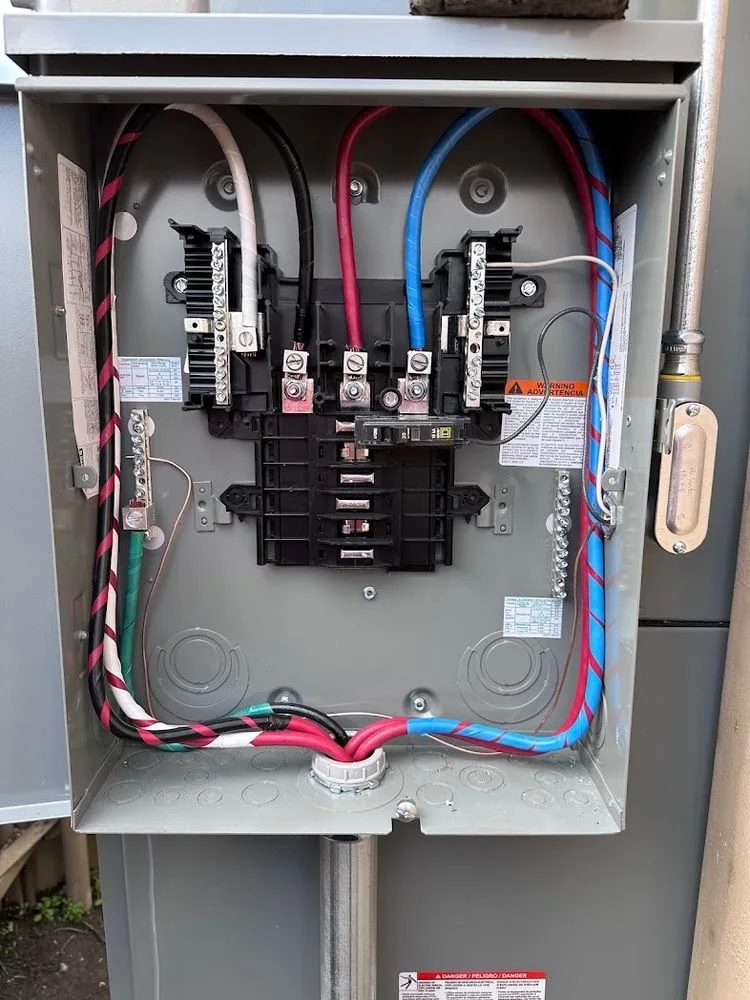
Open electrical panel with breakers and branch-circuit wiring

Available 24 hours

Licensed C-10 · CSLB #1115460

Emergency electrical
10 sections
  1. Quick answer
  2. Why it is dangerous
  3. Outlet or switch
  4. Smell at the panel
  5. Heaters and cords
  6. The smell pattern
  7. After new work
  8. Damage and fire
  9. Finding the source
  10. When to call

A burning smell near an outlet, switch, or electrical panel is not a symptom to test repeatedly. It usually means something electrical is getting hotter than it should — a loose connection, a worn outlet, a failing switch, damaged wiring, an overloaded connection, a failing breaker, arcing inside a box or panel, or an appliance or cord rather than the house wiring.

Stop using the affected outlet, switch, or circuit. Leave it off. If there is smoke, flame, or active arcing, leave and call 911.

The useful first question is not “What part should I replace?” It is whether there is active heat, arcing, smoke, or fire — and whether the affected circuit can be left de-energized safely until it is inspected. A smell alone may be the first warning. Do not wait for visible flame before taking it seriously.

Quick answer: what should you do right now?

If you smell burning, hot plastic, or an unusual electrical odor near an outlet, switch, or breaker panel:

  1. Stop using the affected outlet, switch, appliance, or circuit.
  2. Do not keep operating it to see whether the smell returns.
  3. If the affected circuit can be identified and the panel itself is not hot, sparking, smoking, wet, or otherwise unsafe to approach, switch that breaker OFF.
  4. Leave the circuit off until the cause is inspected.
  5. If there is smoke, visible flame, sustained sparking, active arcing, or rapidly increasing heat, leave the building and call 911 from outside.

Do not spray water on electrical equipment. Do not remove the outlet cover, switch plate, or panel deadfront to investigate energized wiring. Electrical Safety Foundation International lists burning odor from receptacles or wall switches, warm or discolored wall plates, and cracking, sizzling, or buzzing as electrical warning signs.

Where you notice itWhat it can meanWhat to do
OutletLoose connection, worn contacts, high-load appliance, or the plug/applianceStop using it; leave the circuit off
Switch or dimmerWorn contacts, loose termination, or failing controlStop operating it
Breaker panelLoose termination, failing breaker, bus damage, or arcingDo not remove the cover; arrange urgent inspection
Smell but no smokeInsulation or plastic overheating before visible smokeStill leave the circuit off
Smoke, flame, or active arcingFire emergencyLeave and call 911

Why a burning or fishy electrical smell is dangerous

The smell is evidence that material may be heating, degrading, or burning nearby — not the failure itself, and not proof that the failed part is the one you can see. Possible materials include wire insulation, a receptacle or switch body, a plug, cord insulation, breaker components, a plastic electrical box, and nearby equipment. A connection can overheat without immediately producing enough current to trip a standard breaker, which is why “the breaker never tripped” does not prove the outlet is safe. A localized poor connection can generate substantial heat while the overall circuit current remains below the breaker rating.

Why it often smells like burning plastic. Many electrical devices contain polymers used for insulation, housings, terminal support, wire jackets, breaker bodies, and receptacle bodies. When those materials overheat, the odor may be described as burning plastic, hot electronics, acrid, chemical, fishy, metallic, or smoky. The exact smell does not reliably identify the failed part. What matters is that a new odor localized to electrical equipment is abnormal and should be investigated.

A “fishy” electrical smell is the same class of warning. People often search for a fishy smell from an outlet because heated electrical plastics can produce odors that are difficult to describe. A fish-like or chemical odor does not necessarily mean the outlet itself is melting. The source could be a switch, outlet, dimmer, breaker, wire termination, appliance, power supply, or a nearby electrical component. If the smell is strongest near an outlet, switch, or panel, treat it as an electrical warning until the source is identified.

Common sources at an outlet or switch

A burning smell at the wall is often a loose termination, worn contacts, a high-load appliance exposing a weak connection, or a failing switch — and sometimes the appliance or plug rather than the house wiring.

A loose connection at an outlet is a common heat source. A receptacle carries current through several connection points; if a conductor termination becomes loose, resistance can increase there and create concentrated heat. Possible signs include a burning smell, a warm or hot faceplate, discoloration, crackling, intermittent power, a plug that feels loose, or an outlet that stopped working. The failed connection may be at a terminal screw, a pressure connection, a push-in connection, or a splice behind the receptacle. Replacing the visible outlet may solve the problem if the device itself failed, but the wiring and upstream connections should be checked rather than assuming the receptacle face is the only damaged part.

Worn receptacle contacts should grip a plug securely. If the plug is loose, contact between the plug blade and the receptacle can become poor and generate heat. Warning signs include a plug that falls out easily or feels unusually loose, discoloration around one slot, a warm plug, melting around the receptacle face, and a burning odor during use. A worn receptacle should be replaced rather than adapted with devices intended to make a loose plug fit more tightly.

High-load appliances can expose weak connections. A weak connection may appear normal when the circuit carries a small load, then become obvious when a higher-current appliance is used — a space heater, hair dryer, microwave, toaster oven, vacuum, window air conditioner, or portable cooking appliance. If an outlet smells burnt only when one of these loads operates, do not assume the appliance alone is responsible. The appliance may simply be exposing a deteriorated receptacle or wiring connection. Stop using that outlet until it is inspected.

The appliance or plug may be the source. Not every electrical burning smell originates inside the wall. The problem may be in the plug, cord, appliance, power strip, charger, transformer, or power supply. Inspect only what can be seen externally without touching hot or damaged equipment, and look for a melted plug body, darkened blades, a cracked cord, a scorched power strip, a deformed charger, or an odor strongest at the appliance. If one appliance causes the smell on multiple otherwise normal outlets, the appliance becomes a stronger suspect. Do not keep moving it from outlet to outlet to confirm the failure.

A failing light switch can smell burnt. Switches carry current through internal contacts, and a worn or loose switch can develop arcing, heat, buzzing, delayed operation, flickering, or a burning odor. A dimmer can also run warmer than a conventional switch because of its electronics, but a dimmer should not produce a burning odor, visible melting, scorching, or abnormal crackling. If the smell appears when a switch is operated, stop using it and have the switch and connections inspected.

A slightly warm control is not the same as a hot, burnt-smelling one. Some electronic controls and dimmers can operate warmer than a basic mechanical switch, which makes temperature alone less useful than the entire pattern. More concerning signs include a sudden change from its normal temperature, a faceplate becoming very hot, a burning smell, discoloration, buzzing or crackling, a flickering load, and melted plastic. A control that has always been slightly warm is different from one that suddenly becomes hot and smells burnt.

When the smell is at the panel or a breaker

A smell at the panel deserves prompt attention because the fault may involve equipment carrying significant current. Do not remove the cover to find the source. Parts of service equipment can remain energized even if the main breaker is turned off.

Possible causes include a loose breaker termination, a failing breaker, a damaged breaker-to-bus connection, an overheated neutral connection, a damaged service conductor termination, arcing, and overloaded or deteriorated equipment. If the panel itself is smoking, sparking, visibly arcing, extremely hot, or making loud crackling or sizzling sounds, do not approach it to operate breakers. Leave the area and treat it as an emergency.

A panel can smell burnt without tripping a breaker. A standard breaker trips based primarily on overcurrent behavior. A poor electrical connection can develop high resistance at a small contact point, and that local point can heat severely even though the total circuit current is not high enough to trip the breaker. Certain arcing conditions may not behave like a simple overload either. Abnormal heat, odor, or sound should not be dismissed merely because all breakers remain ON.

A breaker can overheat because of failing internal contacts, a loose conductor termination, a poor bus connection, damage, excessive load, or an inappropriate breaker or installation. Possible signs include a hot-plastic smell near the panel, buzzing, discoloration, a breaker that feels abnormal from outside the enclosure, and repeated tripping. The correct repair depends on what failed. Simply replacing the breaker is not enough if the bus connection or conductor terminal is also damaged.

Arcing can create odor before visible smoke. Arcing occurs when electrical current crosses a gap or unstable connection, and it can produce intense localized heat. Possible signs include crackling, popping, buzzing, intermittent power, flickering, scorched insulation, and a burning odor. The damaged point may be hidden inside a wall box, junction box, panel, appliance, or cable connection, which is why a burning smell can exist before any visible evidence appears on the wall.

Overheating, overloading, heaters, and cords

Overheating is not the same as overloading. A space heater or a power strip can expose a weak connection without the whole circuit being overloaded.

Overload means the circuit is carrying more current than it should for the design or protective device. Overheating means a component or connection is becoming excessively hot. An overload can cause overheating, but a loose connection can also overheat without the entire circuit being overloaded. That distinction matters because a homeowner may have a perfectly ordinary 10-amp load on a 15-amp circuit and still have a dangerously hot loose termination.

Space heaters are often involved because they draw a substantial continuous load from a normal receptacle circuit, which makes them good at exposing weak electrical connections. If an old receptacle, extension cord, power strip, or connection is already deteriorated, heater use can make the problem appear. Safer practice is to plug heaters directly into an appropriate wall receptacle, skip damaged or loose-fitting outlets, avoid undersized extension cords and overloaded power strips, and stop using the circuit if there is heat or odor. A heater does not automatically mean the house wiring is defective. A burning outlet while a heater is operating is not normal.

Extension cords and power strips can smell burnt from an excessive connected load, a damaged cord, a loose plug connection, a worn receptacle, a poor-quality or damaged power strip, or heat trapped under rugs or furniture. Do not use a power strip as a way to increase the capacity of a branch circuit. It only provides more connection points. The circuit’s electrical capacity remains the same.

Next step

Have the smell traced

Tell us whether it is an outlet, a switch, or the panel, whether anything feels warm, and whether a breaker is already off. Do not keep using it to see if the smell returns.

What the smell pattern is telling you

No smoke, no heat at the plate, a smell that fades, or a smell that follows one light or one wall still deserves prompt evaluation. The pattern points at where to look — it does not make continued use reasonable.

Burning smell but no smoke is still urgent. Smoke is a later and more obvious sign. A burning odor can appear when insulation or plastic is overheating before visible smoke develops. Prompt electrical diagnosis fits a burning smell localized to an outlet or switch, with no visible smoke or active arcing, a circuit that can be safely turned off, and a smell that subsides once de-energized. Emergency response is the right call for visible flame, sustained smoke, active sparking or arcing, heat spreading into the wall, a rapidly increasing odor, or a panel that is actively smoking or sparking. The absence of smoke does not make continued use reasonable.

A cool outlet does not rule out an electrical problem. The heat may be behind the receptacle, at a wire splice, elsewhere upstream, inside the plug, or inside the connected appliance. A plastic wall plate can also remain relatively cool while a poor connection heats deeper inside the box. Do not use touch alone as the safety test.

A hot outlet with no smell is still a warning. ESFI identifies warm or discolored wall plates as signs associated with overloaded or problematic electrical circuits. Potential causes include a loose connection, a worn receptacle, a heavy load, poor plug contact, or a failing device. A hot receptacle should not be repeatedly tested with appliances to see if it gets hotter. Stop using it and have the cause inspected.

A smell that disappears after a few minutes does not prove the problem is gone. An electrical connection may heat only while current is flowing. Once the appliance stops or the connection cools, the odor can fade, then return the next time the load operates. Intermittent symptoms are common with loose connections, failing switches, appliance heating cycles, HVAC equipment, and high-load receptacles. Tell the electrician what was operating immediately before the smell appeared.

A smell only when the light is on can point at a failing switch, a loose switch connection, a damaged fixture connection, an overheated lamp holder, a failing LED driver, incorrect lamp wattage for a fixture, or damaged wiring. If the smell is clearly associated with one lighting circuit, stop operating that circuit until it is checked. Do not repeatedly switch it on to reproduce the odor yourself.

A smell from a wall with no outlet there can still be electrical. Wiring can run through walls and ceilings even where there is no visible device. Other possible sources include a hidden junction box, light-fixture wiring, cable, a transformer, an appliance on the opposite side of the wall, HVAC equipment, or a plumbing or non-electrical source. If an electrical burning smell appears to come from inside a wall, especially with heat, crackling, or flickering, stop using the affected circuit if it can be identified safely and arrange prompt inspection.

A smell near the main electrical panel is different from a local wall outlet. Do not remove the deadfront, tighten terminals, pull breakers, touch service conductors, or keep resetting a tripping main breaker. If the smell is mild but clearly localized to the panel and the enclosure is not showing active fire symptoms, arrange urgent electrical inspection. If there is smoke, sparking, visible arcing, or substantial heat, move away from the panel and call emergency services.

When the smell starts after new work or a specific load

Timing is a clue. A smell that began after an installation, or only when charging or the air conditioner runs, points at what to check first.

After a new outlet or switch was installed, tell the electrician exactly what changed. Possible issues include a loose termination, a damaged conductor, an incorrect connection, an overloaded device, improper equipment selection, or wiring disturbed during installation. A new device should not need a “burn-in” period that smells like melting electrical plastic. Do not accept that explanation without verifying the manufacturer’s instructions for the actual equipment involved.

After an EV charger installation, charging places a substantial continuous load on its branch circuit. A new burning smell near the EV breaker, disconnect, charger, panel, or receptacle requires prompt investigation. Possible causes include a loose terminal, improper conductor termination, a breaker or receptacle issue, a charger connection, or damaged equipment. A properly installed EV charging circuit should carry its intended continuous load without connections overheating. Stop charging until the source is identified.

When the air conditioner runs, the problem could be electrical or mechanical. Possible electrical locations include the breaker, disconnect, contactor, conductor termination, or motor connection. Possible HVAC-related sources include a failing motor, an overheated winding, or a damaged control component. If the odor appears specifically when HVAC equipment starts, stop using the equipment and have the appropriate electrical and HVAC components inspected.

If the breaker keeps tripping too, do not keep resetting it. A repeated breaker trip can indicate overload, a short circuit, a ground fault, an arc fault, a failing appliance, or damaged wiring. When repeated tripping occurs together with burning odor, there is even less reason to keep energizing the circuit. Leave it off until diagnosed.

Visible damage, shutting the circuit off, and fire response

Scorching, a stuck plug, or a smell you can localize are reasons to leave the circuit off — not to keep testing it. If there is active fire, life safety comes first.

A black or scorched outlet means the condition has progressed beyond a smell alone. Possible signs include a brown wall plate, a blackened receptacle slot, melted plastic, a charred plug, or a warped device. Do not continue using the outlet. If there is no active fire, leave the circuit off and have the outlet, wiring, and connected load inspected. If there is active smoke, sparking, or flame, evacuate and call 911.

Do not force a hot, melted, or deformed plug out of a receptacle. If plastic has softened or fused, pulling on it can expose damaged energized parts. De-energize the circuit if that can be done safely and leave the plug in place for the electrician to evaluate. If there is active smoke or fire, leave the area rather than trying to manipulate the plug.

Turning the affected breaker OFF is a reasonable way to stop current flowing through the suspected circuit when the smell is localized to a known outlet or switch, the electrical panel is safe to approach, and there is no smoke, sparking, visible arcing, water, or severe panel heat. Do not repeatedly turn it back on to test whether the odor returns. If the panel itself is smoking, sparking, crackling heavily, or extremely hot, do not approach it simply to switch a breaker. Move away and treat the situation as an emergency.

The main breaker is not a DIY permission slip to open the panel. A main disconnect may de-energize most of the home’s branch circuitry, but it does not necessarily remove voltage from all service-side components inside the equipment. If there is an active fire or unsafe panel condition, do not approach the panel to reach the main breaker. If there is no active fire and a qualified responder advises shutting off the main, follow that direction only if the equipment can be approached safely.

Do not use water on an electrical fire. Water can conduct electricity and create additional shock and electrocution risk around energized equipment. If there is active fire, get people out, call 911, and follow emergency-service instructions. Do not remain in the building trying to diagnose which breaker caused it.

A fire extinguisher is not a reason to stay inside. For an active fire, life safety comes first. If a fire is growing, producing significant smoke, or conditions are uncertain, evacuate and call 911. Portable fire extinguishers are only appropriate when the fire is very small, you have the correct extinguisher, you know how to use it, you have a clear escape route, and you are not putting yourself at risk. Do not let extinguisher use delay evacuation.

Could it just be dust burning? Sometimes electrical appliances produce temporary odors for non-fault reasons — heating equipment burning accumulated dust after a long period of inactivity, or a manufacturer-approved curing odor from some new equipment. That explanation should match the actual equipment and operating conditions. An outlet, wall switch, or breaker panel does not normally need to “burn off dust” during ordinary use. If the smell is localized to permanent wiring devices, assume an electrical problem until proven otherwise.

How electricians find the source and what the repair may involve

The goal is to find where the heat originated and how far the damage extends — not simply to replace the part that smells strongest. Heat damage can extend beyond the visible device.

Finding the source means determining where the heat originated. Depending on the symptoms, an electrician may identify the affected circuit; inspect the outlet or switch, conductor terminations, and upstream and downstream devices; check breaker condition and panel connections; measure current under load; check voltage drop; look for damaged insulation, arcing, or heat damage; reproduce the operating condition that caused the smell; and use thermal measurement where useful.

The wiring does not always need replacement, but sometimes it does. Device only means the receptacle or switch failed and the conductors remain sound. Device and damaged conductor end means heat damaged a short section of conductor or insulation near the termination. Branch-circuit repair means the fault lies in a splice, junction, or cable section. Panel repair means a breaker, terminal, or other serviceable component is damaged. Panel replacement becomes the scope when bus or enclosure damage is extensive, equipment is obsolete, or safe repair is not practical. Broader rewiring is for multiple circuits with widespread deterioration or repeated heat damage. The scope should follow the damage. One burned outlet does not automatically justify rewiring the house.

A burning smell from a panel does not automatically mean the entire panel must be replaced. Replacement becomes more reasonable when inspection finds a damaged bus, multiple overheated connections, extensive arcing damage, severe corrosion, obsolete equipment with poor repair options, enclosure damage, or broader condition issues. If the damage is isolated and repairable with listed compatible components, a more limited repair may be appropriate.

Federal Pacific or Zinsco does not answer the smell by itself. The immediate problem still needs to be diagnosed, and a burning smell should not be attributed to the brand name without inspection. If heat or arcing damage is found in an older Federal Pacific Stab-Lok or Zinsco panel, the age, condition, design, and availability of suitable replacement components can affect whether repair is a sensible long-term choice. That is a separate decision from finding the immediate failure.

When to call — and when it is a fire emergency

Prompt electrical diagnosis is not the same as a fire emergency. The distinction is whether there is active flame, smoke, or spreading heat.

Arrange prompt electrical diagnosis for a burning or fishy smell near wiring devices, a hot outlet or switch, discoloration, buzzing or crackling, intermittent power, repeated breaker trips, a melted plug or receptacle, an odor that returns whenever a load operates, or an odor near the breaker panel. Do not continue using the affected equipment until it is inspected.

Leave the building and call 911 if there is visible flame, sustained smoke, active arcing, repeated or sustained sparking, rapidly spreading heat, fire inside or around the electrical panel, and smoke coming from inside a wall.

At that point, the priority is no longer electrical troubleshooting. It is life safety.

What to tell the electrician: where the odor was strongest, what equipment was operating, whether the outlet or switch stopped working, whether lights flickered, whether a breaker tripped, whether the smell returned under load, whether there was buzzing or crackling, whether any electrical work was recently done, and whether you saw discoloration or melting. If safe, take exterior photos of visible damage. Do not remove covers to get a better picture.

Burning smell in Sacramento: what to do next

A burning smell from an outlet, switch, or breaker panel means stop using the affected electrical equipment and find the source before re-energizing it. The cause may be small — one worn outlet, one loose termination, one failed switch — or it may involve damaged branch wiring, a failing breaker, a panel connection, or arcing. The smell alone cannot tell you which. What it can tell you is that continued use is not a good diagnostic strategy.

For Sacramento-area homes, Litel Electric can trace the affected circuit, inspect the outlet or switch and upstream connections, test the breaker and panel where needed, and determine how far any heat or arcing damage extends before defining the repair scope. See Burning smell or sparking. Call (279) 972-9272.

Burning smell FAQs

Why does my outlet smell like burning plastic?

The most common electrical possibilities are an overheating connection, damaged receptacle, poor plug contact, failing wiring termination, or overheated connected equipment. Stop using the outlet and have the source identified.

Why does my outlet smell fishy?

Electrical plastics and overheated components can create chemical odors that people sometimes describe as fishy. If the odor is localized near an outlet, switch, or panel, treat it as an electrical warning.

Can an outlet burn without tripping the breaker?

Yes. A high-resistance connection can create substantial localized heat while total circuit current remains below the breaker’s trip threshold.

Why does the burning smell come and go?

The failed connection or device may heat only when a load operates. Once the load stops, it cools and the odor fades. That does not mean the underlying fault is gone.

Is a warm outlet normal?

Some electronic receptacles or controls may operate slightly warmer than ambient, but unusual heat, discoloration, burning odor, loose plug fit, or crackling are warning signs and should be investigated.

What does a burning smell from the breaker panel mean?

Possible causes include a loose connection, failing breaker, damaged bus connection, overheated neutral, or other service-equipment problem. Do not remove the panel cover to investigate it yourself.

Should I keep resetting the breaker?

No. Repeated tripping means the circuit needs diagnosis. Burning odor plus repeated trips is a strong reason to leave the circuit off.

Can I replace the outlet myself if it looks burnt?

A visibly burned outlet may have heat damage in the box or conductors behind it. The cause and extent of damage should be identified before simply installing another receptacle.

Does one burned outlet mean I need a new electrical panel?

Usually not. The electrician should determine whether the problem is local to the device or whether upstream panel or circuit damage exists.

Sources

Get estimate

Tell us what is happening, or what you are planning. We read the details, tell you what else we need to know, and explain the next step before anything is scheduled.

  1. 01

    You send the problem or the plan, with the address if you have it.

  2. 02

    We reply with what it involves and what has to be seen in person.

  3. 03

    Nothing is scheduled, and nothing is priced, until the equipment has been looked at.

License
CSLB #1115460 · C-10 electrical