
Backup power systems in Sacramento
What stays on when the utility does not. Inlet, interlock, or a transfer switch — matched to the generator or the battery path, and to the Sacramento service it feeds.
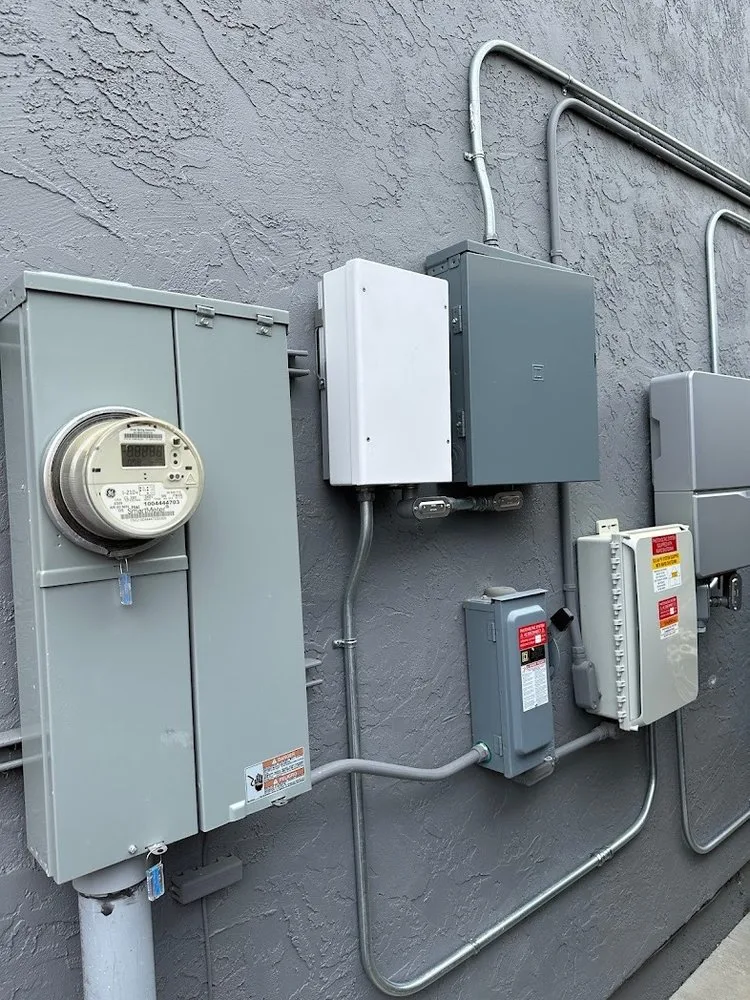
Backup power: generator inlets, transfer switches, and battery-ready electrical
What stays on when the utility does not. Inlet, interlock, or a transfer switch — matched to the generator or the battery path, and to the Sacramento service it feeds.
Generator inlet installation
A generator inlet plus a listed interlock or a manual transfer switch, sized to the circuits you want backed up. This is not a dryer-outlet workaround.
Generator inletGenerator transfer switch
A transfer switch sized to the service and the loads that have to stay on. Start here when a standby generator should transfer without anyone standing at the panel.
Transfer switchBattery-ready electrical
The house path for a battery that is not on site yet — the landing, the backup loads, and the service. The battery itself is a different purchase.
Battery-ready electrical
How backup power is matched to the loads that have to stay on
Backup is a system: the inlet or transfer method, the loads that must stay on, and a generator or battery that can carry them. None of those pieces works alone.
-
List what must stay on
Heat, refrigeration, a well or sump, medical equipment, and enough light to live. That list sizes the transfer method and the machine. Backing up everything is a bigger, more expensive system.
-
An inlet is not a transfer method
The outdoor connection is useless without a listed interlock or a transfer switch behind it. A dryer-outlet workaround is not a substitute — back-feeding the house through one is dangerous.
-
Interlock vs transfer switch
An interlock is a mechanical slide on this panel for a portable generator. Selected circuits, or a standby unit that should start itself, is a transfer switch.
-
Battery-ready is the house side
The landing, the backup loads, and the service — before the unit is on site. The battery itself is a different purchase. That path is battery-ready electrical.
Backup power services
- Backup powerTransfer equipment matched to your service and the loads you want backed up.View service
- Generator interlockA listed interlock kit on the panel so the main and the generator breaker cannot be on together.View service
- Critical-load panelThe subpanel that holds the circuits that have to stay on, fed through a transfer method — the electrical work, not the generator.View service
What backup power connects to
What stays on ties into the service, the car, and the loads you are electrifying.
- Electrifying the loads you back upHome electrification
- Charging on the same serviceEV charging
- The service the transfer feedsElectrical panels
Backup power questions
What to settle before a generator or a battery is bought.
Can I just use the dryer outlet?
No. A dryer receptacle is not a generator inlet. Back-feeding the house through one is dangerous for you and for anyone on the lines. Start at generator inlet.
Is an interlock the same as a transfer switch?
No. A listed interlock is a mechanical slide on this panel. Selected circuits or automatic transfer is a transfer switch.
Do I need 200 amps for backup power?
Not because of backup. The transfer is sized to the loads you name. Whether the service is short is a separate panel upgrade question.
What do you need from me?
Which circuits have to stay on, a photo of the panel with the door open, and whether a generator or a battery is planned. Do not buy transfer equipment off a generic kit list first.
What are the different types of backup power systems?
Portable plus inlet, standby generator with transfer, and battery.
Still not sure which job this is? Call (279) 972-9272 — available 24 hours.
Serving 19 communities across the Sacramento area
Litel Electric serves homeowners throughout all 19 communities in our service area — from Davis and Woodland to Roseville, Folsom, and Elk Grove.
Get estimate
Tell us what is happening, or what you are planning. We read the details, tell you what else we need to know, and explain the next step before anything is scheduled.
- 01
You send the problem or the plan, with the address if you have it.
- 02
We reply with what it involves and what has to be seen in person.
- 03
Nothing is scheduled, and nothing is priced, until the equipment has been looked at.
- hi@litelelectric.com
- License
- CSLB #1115460 · C-10 electrical