
Troubleshooting

A breaker keeps tripping. What should you do next?

A tripped breaker tells you something changed on the circuit. Note what happened, reduce the connected load, and do not rely on repeated resets.

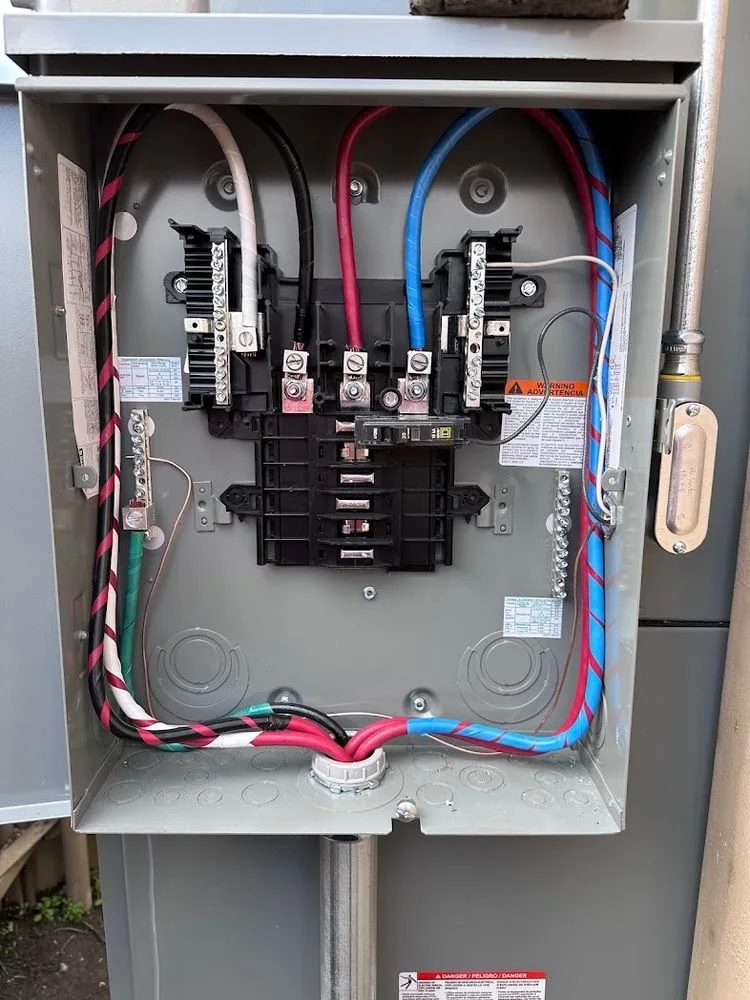
Open three-phase panel with breakers and labeled circuits

Available 24 hours

Licensed C-10 · CSLB #1115460

Emergency electrical
4 sections
  1. Quick answer
  2. Urgent conditions
  3. What you can check
  4. Why the cause matters

A breaker trips to protect the circuit. That is it doing its job — but the trip tells you only that something on the circuit changed, not what. Note what happened before you do anything else, and leave the equipment closed instead of forcing the breaker back on.

Unplug the portable loads, then reset the breaker once. If it trips again, stop. Repeated resets erase the pattern without fixing the cause.

Quick answer: one reset, then stop

Unplug the portable equipment on the affected circuit. Then make one proper reset: move the handle fully OFF, then firmly back to ON. If the breaker holds, add ordinary loads back one at a time and stop the moment the symptom returns. If it trips again — right away, after a load comes on, or with everything unplugged — leave it off.

First, look for an urgent condition

Stop using the circuit if you notice a burning odor, smoke, active sparking, unusual heat, buzzing, visible damage, or water near electrical equipment. Do not touch wet equipment. If there is fire or immediate danger, move away and call emergency services.

A breaker that will not stay reset after you have unplugged everything on it needs an electrician, not another reset. See Breaker won’t reset if the handle will not stay on.

What you noticeWhat to do
Burning odor, smoke, sparking, heat, buzzing, or waterStop using the circuit; if there is fire, leave and call emergency services
Breaker will not stay reset after loads are unpluggedCall an electrician; do not keep resetting
Holds after portable loads are unpluggedAdd ordinary loads back one at a time; stop when it trips
Same trip under normal useHave the circuit diagnosed rather than swapping the breaker
Next step

Have the circuit looked at

Tell us which breaker trips, what was running when it went, and whether anything feels warm. Call and describe it, or send the details with your address.

What you can safely do

Before you reset anything, record the pattern which rooms, outlets, lights, or appliances lose power?; what was switched on immediately before the trip?; does the trip happen right away, or after equipment runs for a while?; has any device, fixture, or appliance recently been added or moved?; and is the issue limited to one circuit, or showing up in several areas?.

This short record is worth more than guessing the breaker is “bad.” It helps tell a simple overload apart from a faulty device, a branch-circuit fault, or a problem at the panel.

Unplug the portable equipment on the affected circuit, and leave anything damaged or suspect disconnected. Check whether a wall switch or a GFCI outlet you can reset has tripped. Follow the manufacturer’s instructions for any appliance involved. Do not remove outlets, switches, fixtures, or the panel cover.

If the breaker holds once the portable loads are unplugged, plugging everything back in at once just recreates the mystery. Add ordinary loads back one at a time, and stop the moment the symptom returns. If you are not sure what belongs to the circuit, leave it off and call.

Why the cause matters

A trip can come from too much load on the circuit, a damaged appliance, a loose or failed device, a fault in the branch wiring, or a problem with the breaker or panel itself. Each one calls for a different repair. Swapping the breaker without knowing which it is usually leaves the real problem in place.

Too much load. Several ordinary devices on one circuit can open a breaker that is doing its job. Unplugging portable loads and adding them back one at a time is how you see whether the trip follows a particular combination.

A damaged appliance or a loose device. A trip that follows one piece of equipment, or that continues after portable loads are off, points at the equipment or at a failed outlet, switch, or fixture — not at a “bad” breaker.

A fault in the branch wiring, or a problem at the breaker or panel. If the breaker will not stay reset with portable loads unplugged, the fault may be in the wiring, a hardwired load, the breaker, or the panel. That is diagnosis, not another reset.

Breaker keeps tripping in Sacramento: what to do next

When a breaker keeps tripping, treat the trip as a symptom, not a device to swap. Unplug portable loads, reset once, and stop if it trips again. If the same trip returns under normal use, the circuit needs diagnosis at a device, the branch wiring, the breaker, or the panel.

Tell us which areas lost power, what was running at the time, whether the breaker will stay reset, and anything you noticed — heat, odor, sound, or visible damage. Clear access to the panel and the affected rooms. That gives the visit a specific starting point instead of a guess.

For Sacramento-area homes, Litel Electric can evaluate the affected circuit, isolate the load that trips it, and determine whether the repair belongs at a device, the branch wiring, the breaker, or the panel.

See Outlet and circuit work.

Call (279) 972-9272.

Sources

Get estimate

Tell us what is happening, or what you are planning. We read the details, tell you what else we need to know, and explain the next step before anything is scheduled.

  1. 01

    You send the problem or the plan, with the address if you have it.

  2. 02

    We reply with what it involves and what has to be seen in person.

  3. 03

    Nothing is scheduled, and nothing is priced, until the equipment has been looked at.

License
CSLB #1115460 · C-10 electrical