
On this page 5 sections
What backup power involves
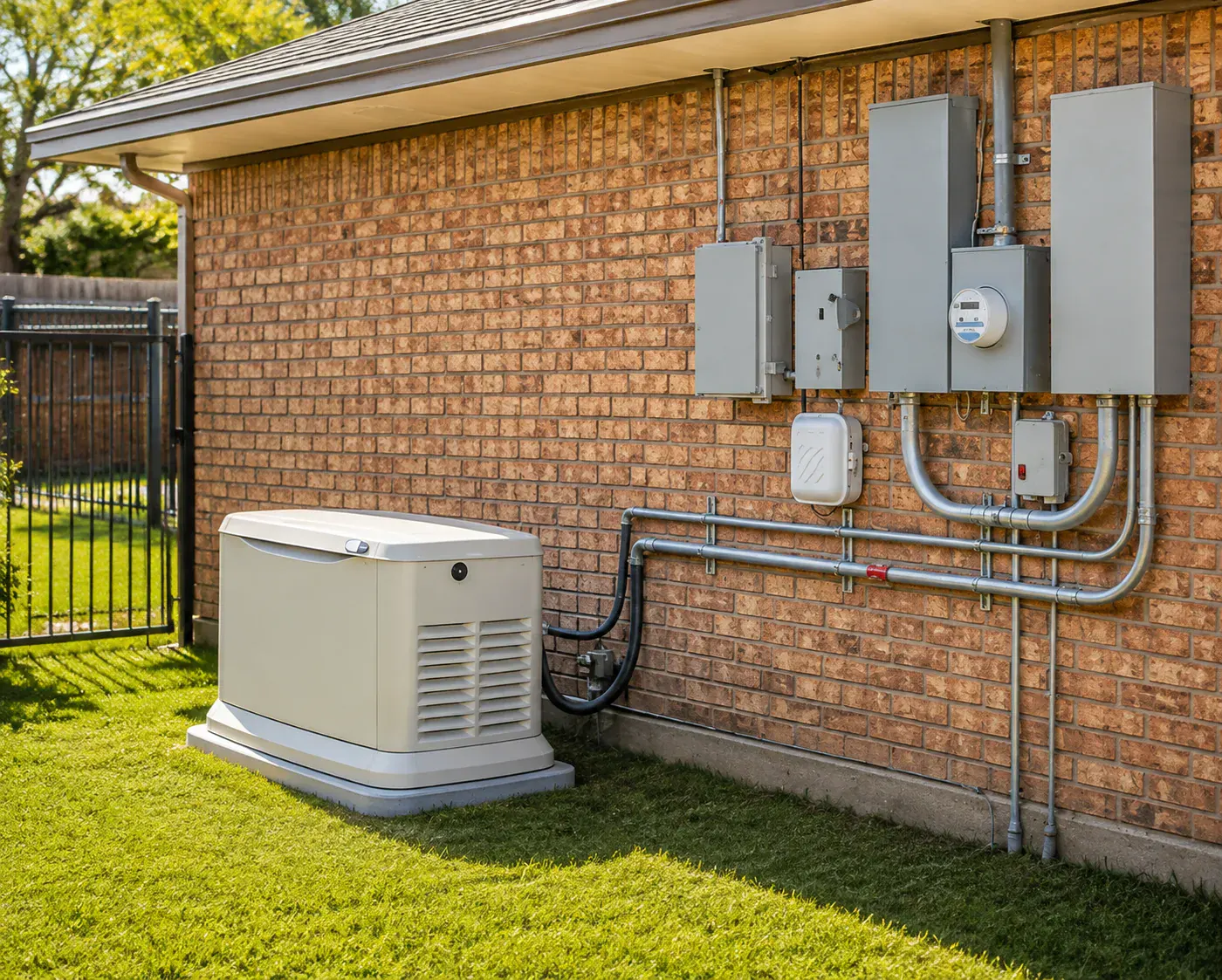
A transfer switch decides what stays on when the power does not. Which circuits those are is your call; sizing the equipment to your service so it can carry them is ours. Sacramento, Yolo and Placer addresses all sit behind a utility that can fail; which circuits stay on when it does is the decision here.
Keeping key circuits on
You choose what has to keep running in an outage; the transfer equipment is sized to carry exactly those.
A generator with no transfer gear
A generator without a transfer switch has no safe way to power the house — the switch is what makes it usable.
Unclear or damaged transfer gear
Equipment that is damaged, or that nobody can explain, is checked before it is trusted in the next outage.
Planning it with panel work
If the panel is already being worked on, that is the cheapest time to add the transfer equipment.
Choose the backup loads before the transfer equipment.
A transfer-switch plan begins with the circuits that matter during an outage, then works back to the generator, service equipment, connection method, and operating steps. That order keeps the project tied to an actual backup-power need.
-
Prioritize the circuits
List what must keep running and what can remain off. Refrigeration, selected lighting, communications, pumps, heating controls, or other property-specific loads should be identified by equipment rather than by a vague whole-property target.
-
Match known equipment
Generator output, connection type, fuel arrangement, and manufacturer information need to be considered with the selected loads. If equipment has not been purchased, define the load plan before choosing it.
-
Plan the safe handoff
The transfer equipment must keep generator power and utility power from being connected together. Panel arrangement, equipment location, cable path, permit, and clear operating instructions all belong in the proposal.
-
Do it with panel work when you can
If the panel is already coming out, that is the cheapest time to add transfer equipment. The panel job is replacement or a capacity check; this job is the backup path. A service-level surge device is panel equipment — whole-home surge protection — not the transfer switch.
Backup power: what we check before sizing it
How the service and panel are arranged now
Which circuits you want running in an outage
The generator itself and where it connects
How the transfer works, where the gear goes, and the permit
Backup power: what helps before we arrive
List the circuits or equipment that matter during an outage
Have generator specifications available if equipment is already owned
Have somewhere outside in mind for the generator to run
Do not connect a portable generator directly to household wiring
Backup power: what changes the cost
A backup-power job is priced from how much stays on and how the handoff is built. These are what move it.
-
How many circuits stay on
The count and kind of backed-up circuits set the size of the transfer equipment. A handful of essentials is different from most of the house.
-
The transfer method
A manual transfer switch, an interlock, or an automatic switch are different equipment and different installs. Which suits the property depends on the generator and how hands-off you want it.
-
Generator type and connection
A portable inlet is a smaller job than a permanently mounted standby unit with its own pad, fuel and controls.
-
Where the equipment goes
The distance and route between the generator connection, the transfer gear and the panel decide the conduit and cable.
-
Permit and inspection
Transfer equipment is permitted and inspected. The authority for the address is confirmed before scheduling.
Not sure this is the right job?
Tell us what you are seeing — what is tripping, what changed, or what you are planning — and we will tell you what the work actually is before anyone drives out.
Backup-power questions
Can a portable generator power the whole property?
Rarely. Most portable units will run a handful of circuits, not a whole house. Deciding which circuits matter comes before choosing the generator. The outdoor connection is a generator inlet, not a dryer outlet.
Why is transfer equipment important?
It keeps generator power and utility power apart. Without one, people improvise — and back-feeding a house is dangerous for you and for anyone working on the lines. A listed kit is generator interlock; selected circuits or automatic transfer is a transfer switch.
Can this be planned with panel work?
Yes. If the panel is being worked on anyway, that is the cheapest time to add the transfer equipment.
A battery is planned, not a generator.
That is battery-ready electrical — the house path before the unit is on site. This job is the generator transfer path.
Do I need a permit to install a home generator?
Yes in the Sacramento metro. The building department and the utility both have a say. We pull the permit and coordinate the installation.
How far away from the house should a generator be placed?
The listing and the local fire/building rules determine the setback from openings and the property line.
Can I power my whole house with a backup?
A whole-house generator or a large battery can, if the service and the transfer equipment are sized for it.
Still not sure it is the right job? Call (279) 972-9272 — available 24 hours.Want the detail? Generator vs battery backup
Helpful guides
Generator vs battery backup
The electrical job is the transfer method — inlet, interlock, or a gateway — sized to what has to stay on. The generator or the battery is a different purchase. Call (279) 972-9272.
Read guideWhich circuits belong on backup
The list is the design. Fridge, heat, a well or sump, medical equipment, enough light to live — not the EV, the range, or the whole house by default. Call (279) 972-9272.
Read guideOutage: utility or home?
A broad outage usually starts with the utility. A partial outage or a condition isolated to one property may need an electrician.
Read guide
Serving 19 communities across the Sacramento area
Litel Electric serves homeowners throughout all 19 communities in our service area — from Davis and Woodland to Roseville, Folsom, and Elk Grove.
Get estimate
Tell us what is happening, or what you are planning. We read the details, tell you what else we need to know, and explain the next step before anything is scheduled.
- 01
You send the problem or the plan, with the address if you have it.
- 02
We reply with what it involves and what has to be seen in person.
- 03
Nothing is scheduled, and nothing is priced, until the equipment has been looked at.
- hi@litelelectric.com
- License
- CSLB #1115460 · C-10 electrical