
Planning

Generator vs battery backup for a Sacramento home

The electrical job is the transfer method — inlet, interlock, or a gateway — sized to what has to stay on. The generator or the battery is a different purchase. Call (279) 972-9272.

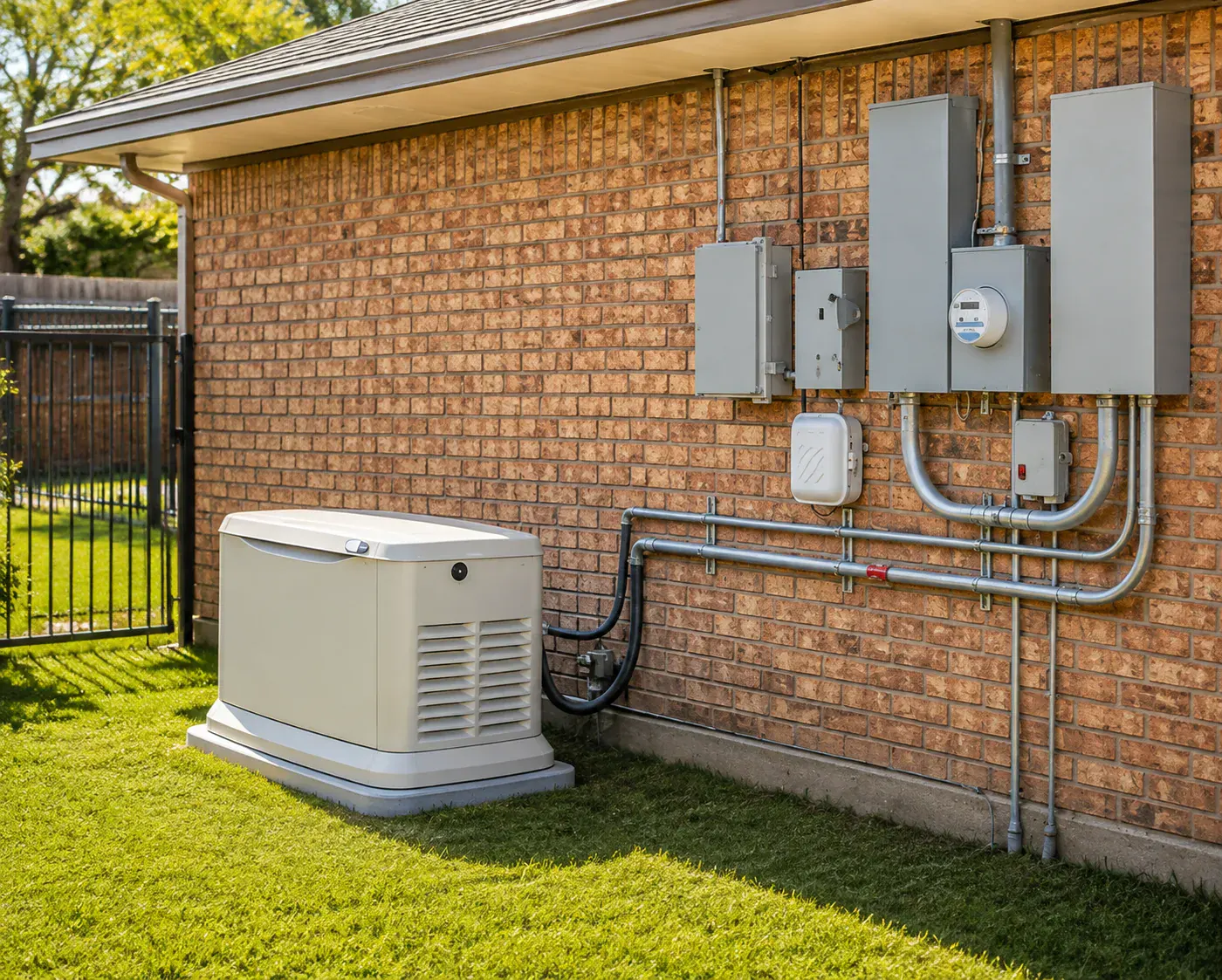
Standby generator and transfer equipment installed beside a brick home

Available 24 hours

Licensed C-10 · CSLB #1115460

Emergency electrical
8 sections
  1. Quick answer
  2. The transfer method
  3. Not a dryer outlet
  4. Portable generator
  5. Standby generator
  6. Battery backup
  7. This is not solar
  8. What has to stay on

A generator and a battery can both keep part of a Sacramento house on when the utility does not. They are not the same electrical job.

The electrical difference is the transfer method: inlet plus interlock or transfer switch for a generator; a gateway or listed battery transfer for a battery — never a dryer outlet.

A portable generator needs an outdoor inlet and a listed way to keep utility power and generator power apart. A standby generator needs a transfer switch sized to the machine and to the circuits you name. A battery needs a house-side path — a gateway or listed transfer, the backup loads, and a service that can accept the equipment — before the unit is on site.

The real question is not “Which machine should I buy first?” It is: what has to stay on, and which transfer method actually connects that list to a generator or a battery without back-feeding the utility? Litel’s work is the house-side electrical. The generator or the battery itself is a separate purchase.

Quick answer: generator vs battery backup — what’s the electrical difference?

Both need a legal transfer. Neither is a dryer outlet, an extension cord through a window, or a plug into a wall receptacle.

Portable generatorStandby generatorBattery backup
What you buy separatelyThe portable setThe pad-mounted unitThe battery
House electricalInlet plus interlock or manual transferAutomatic transfer switchGateway or listed battery transfer, backup loads
Who starts itYou, outsideThe unit, on an outageThe equipment, on an outage
Typical coverageA handful of circuits you manageThe circuits the switch is wired forThe circuits on the backup list
Fuel / energyGasoline or propane you supplyNatural gas or propane, on siteStored electricity; runtime is the bank
Not this jobA dryer-outlet workaroundThe generator set itselfThe battery install, or solar

The family page is backup power. The battery house path is battery-ready electrical. The outdoor connection for a portable set is generator inlet.

The transfer method is the job

Whatever sits outside, the house has to choose a source without connecting the utility and the backup together. That is the electrical work. The three common methods are not interchangeable kits: a listed interlock on this panel, for a portable generator; a transfer switch — manual for portable, automatic for standby; or a battery gateway or the listed transfer the battery equipment requires.

An interlock is a mechanical slide so the main and the generator breaker cannot be on together. It feeds the whole panel; you manage load by which breakers you leave on. It has to be listed for that exact enclosure. A sliding plate from a different panel is not a listed interlock.

A transfer switch is the equipment that chooses the source for the circuits you name. Manual if you will start a portable generator. Automatic if a standby unit should start itself.

A battery path is not a generator interlock with a different label. The equipment has a listed landing. Pretending otherwise is how people buy twice. An outdoor inlet with nothing behind it does nothing either — the box is not a transfer method until a listed interlock or transfer switch is on the panel.

A dryer outlet is not a generator inlet

The CPSC is blunt about this. Never try to power the house wiring by plugging a generator into a wall outlet — back-feeding. It is an electrocution risk for utility workers and for neighbors on the same transformer. It also bypasses household circuit protection.

A dryer receptacle is not an inlet. A listed inlet is an outdoor connection, placed so the cord reaches without a walkway hazard, feeding an interlock or a transfer switch — never straight into the panel. The inlet, the transfer method, and the cord rating are one system, sized to the generator you actually own.

Portable generator: inlet, interlock, and carbon monoxide

A portable set is the common Sacramento first step. The electrical side is where the generator will sit, an outdoor inlet, a listed interlock or a manual transfer switch, and a cord rated for the set. You start it. You stand at the panel or the switch. You choose which breakers stay on. A portable generator rarely runs the whole house.

Carbon monoxide is a separate, deadly constraint. CPSC: never run a portable generator indoors, in a garage, basement, crawlspace, or shed. Outside only, well away from windows, doors, and vents — their current guidance is at least 20 feet from the house, exhaust pointed away. Opening a garage door is not ventilation. That placement is why the inlet location is a design decision, not the nearest stud.

Next step

Match the transfer to what has to stay on

Tell us which circuits must stay on, whether a generator or a battery is planned, and send a photo of the panel with the door open.

Standby generator: automatic transfer, not a bigger inlet

A standby unit sits on a pad, on fuel, and should start itself. The electrical side is an automatic transfer switch sized to the circuits you name, the service, and the generator. The generator set is still a separate purchase. The switch does not replace a conversation about which circuits matter.

Whole-house backup is only if the machine and the service can carry that. Most jobs name a list. If the panel is already coming out, that is the cheapest time to add the transfer equipment. The panel job is still the panel job; the backup connection is the separate piece.

Battery backup: the house path before the unit

A battery can keep selected circuits on without fuel and without a pull-start in the dark. Runtime is the bank. A longer outage needs more storage, or a generator in addition — not a larger interlock.

Litel’s page is not the battery install and not a brand. Battery-ready electrical is the house side: what the service can carry, which circuits should stay on, and the gateway or transfer method that equipment is listed for. Buy the unit after that path is known, or at least before the panel is opened for the wrong landing.

A battery adds backup — it is not an everyday load the way an induction range is, and it can shave a peak rather than add one. Treating battery-ready as a generator interlock is the usual mix-up: different listed equipment, a different landing.

This is not solar

Solar is a different conversation when it is offered. A battery can sit with solar. It can also sit without it. The subject is generator vs battery as backup electrical — inlet, interlock, transfer, gateway, the loads that stay on — not a solar-ready panel tour or an inverter shopping list.

What has to stay on is the design

The list sizes the transfer and the machine. Typical starting points are refrigeration, a furnace or heat-pump air handler, a well or sump, medical equipment, and enough lighting and outlets to live. Backing up everything is a bigger, more expensive system.

A defined subset often lands on a critical-load panel — a subpanel that holds only those circuits, fed through a transfer that actually includes them. Which circuits belong on that list is its own decision; the source — generator vs battery — is the question here, not the full load-by-load walkthrough.

Generator vs battery backup electrical work in Sacramento: what to do next

For a Sacramento house that has to stay partly on in an outage:

  1. Name what must stay on.
  2. Decide whether the source is a portable generator, a standby generator, a battery — or not yet.
  3. Build the transfer that source is listed for. Never a dryer outlet.
  4. Place a portable set outside, far from openings, with an inlet that matches that location.
  5. Buy the machine to the electrical path, not the other way around.

This comparison is not a dryer-outlet adapter, an extension cord through a window as the house feed, a generator interlock used as a battery gateway, the generator set or the battery purchase, solar, or a reason to assume 200 amps. A new inlet, interlock, transfer switch, or gateway is permit-required work. See what electrical work requires a permit in Sacramento. Do not buy transfer equipment off a generic kit list first.

Bring a photo of the panel with the door open. If a generator is already owned, its output and the inlet or cord rating. If a battery is already chosen, the listed transfer or gateway it requires.

Litel Electric installs the house side of backup power — inlets, interlocks, transfer switches, and battery-ready landings — sized to the circuits you name. The generator or the battery is yours to purchase.

See Backup power.

Call (279) 972-9272.

Generator vs battery backup FAQs

Can I just use the dryer outlet?

No. A dryer receptacle is not a generator inlet. Back-feeding the house through one is dangerous. That is CPSC guidance, not a preference.

Is an interlock the same as a transfer switch?

No. An interlock is a listed mechanical slide on this panel for a portable generator. A transfer switch chooses the source for the circuits you name, manual or automatic.

Do I need 200 amps for backup?

Not because of backup. The transfer is sized to the loads you name. Whether the service is short is a separate panel upgrade question.

Should I buy the battery first?

Easier not to. What the service can carry and which circuits stay on narrow the equipment. That path is battery-ready electrical.

Can a portable generator power the whole house?

Rarely. Most portable units run a handful of circuits. The list comes before the machine.

I already own a generator — what is still missing?

Usually the inlet and a listed transfer method, sized to that set — not a second generator.

Does backup power need a permit?

Yes for the electrical: inlet, interlock, transfer switch, gateway, a new subpanel. The City of Sacramento lists new residential electrical circuits as minor-permit work, and the surrounding jurisdictions run their own process.

Sources

Get estimate

Tell us what is happening, or what you are planning. We read the details, tell you what else we need to know, and explain the next step before anything is scheduled.

  1. 01

    You send the problem or the plan, with the address if you have it.

  2. 02

    We reply with what it involves and what has to be seen in person.

  3. 03

    Nothing is scheduled, and nothing is priced, until the equipment has been looked at.

License
CSLB #1115460 · C-10 electrical