
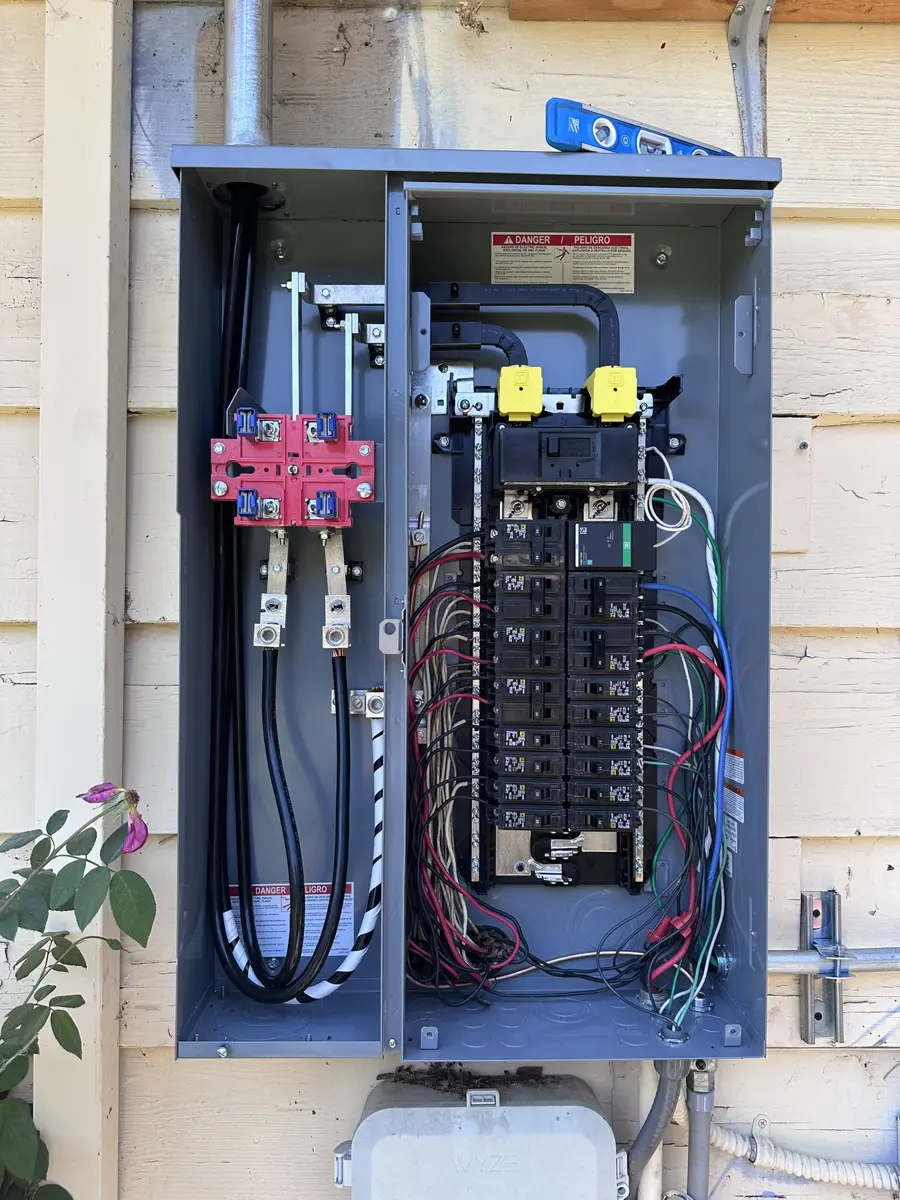
If you are changing the permanent electrical system in a Sacramento home, there is a good chance the work requires a permit — including jobs homeowners sometimes assume are “too small,” such as electrical panel replacement, new circuits, rewiring, ceiling fans, whole-house fans, EV charger circuits, and electrical work inside kitchen and bathroom remodels. In the City of Sacramento, many of those jobs are classified as minor permits because they do not require conventional construction plans. The work is still permitted and inspected.
A minor electrical permit is still a permit. City of Sacramento and unincorporated Sacramento County are different authorities. If the job adds or materially changes permanent wiring or equipment, check the permit before work begins.
Electrical permits in Sacramento at a glance
| Project | City of Sacramento | Unincorporated Sacramento County |
|---|---|---|
| Main or subpanel change | Yes — residential electrical minor permit | Yes — typical permit-required work |
| New electrical circuit | Yes — residential electrical minor permit | Yes |
| Rewire | Yes — residential electrical minor permit | Typical permit-required (circuits / remodels) |
| Ceiling fan | Yes — residential electrical minor permit | Yes — ceiling fans and lights |
| EV charger circuit | Yes — plan-review submittal required | Yes |
| Kitchen/bath remodel electrical | Yes — remodel/minor permit; structural needs plan review | Yes |
| Addition / ADU / solar | Yes — project permit process | Yes |
A new EV charger circuit is the important City exception because the City specifically states that it requires plan-review submittal. A Sacramento mailing address may be inside the City, in unincorporated Sacramento County, or in another incorporated city. Those are different permitting authorities.
City of Sacramento vs Sacramento County
“Sacramento” is not one permit jurisdiction. A Sacramento mailing address may sit inside the City of Sacramento, in unincorporated Sacramento County, or inside another incorporated city in the region — Citrus Heights, Elk Grove, Folsom, Rancho Cordova, and West Sacramento among them. Each jurisdiction can have its own application and inspection process.
The electric utility does not determine the permit jurisdiction. A home can be served by SMUD while the electrical permit is issued by the City of Sacramento, Sacramento County, or another local city.
City of Sacramento: common electrical projects. Under current City guidance, main electrical panel changeout, subpanel changeout, whole-house rewire, a new ordinary branch circuit, a ceiling fan, and a whole-house fan are typically residential electrical minor permits. A new EV charger circuit is also permitted, but it requires plan-review submittal. A nonstructural kitchen or bath remodel typically uses the residential remodel/minor permit path; a structural remodel, room addition, solar PV, and an ADU go through plan review or their own project permit process. This is a practical summary of current City guidance, not a substitute for project-specific direction from the City.
Sacramento County: common permit-required electrical projects. For properties in unincorporated Sacramento County, current County guidance lists typical permit-required work including ceiling fans and lights, electrical panels, electrical circuits, EV charging stations, kitchen and bathroom remodels, additions and alterations, ADUs, and solar systems. If the address is outside City limits, check the County or applicable incorporated city’s permitting process rather than relying on City of Sacramento instructions.
If you are not sure whether the property is in the City. Check the actual jurisdiction before applying. Do not rely on ZIP code, postal city, utility provider, or “Sacramento” in the mailing address — those do not necessarily establish the building-permit authority. A City permit application cannot substitute for a County permit, and vice versa.
What is a minor electrical permit in Sacramento?
The City of Sacramento defines a minor permit as a permit for work that does not require construction plans. Instead of a conventional plan-review process, code compliance is generally reviewed in the field during inspection. Current City residential electrical minor work includes main and sub service panels, rewire work, whole-house fans, ceiling fans, and new electrical circuits. That makes permitting easier. It does not make the work permit-exempt.
Does an electrical permit mean plans are required? Not always — this is one of the most important Sacramento-specific distinctions. Current City guidance lists ceiling fans, electrical panel changeouts, whole-house rewires, electrical circuits, and other minor permits as generally not requiring conventional plan review. A project can therefore be permit required + plans not required. That is why homeowners should not confuse “no plans” with “no permit.”
Which projects usually require plan review? Broader building work generally does. Examples listed by the City include a room addition, a structural remodel, a new single-family residence, a pool, a larger shed or building, a detached garage, and a deck or patio cover where not exempt. Electrical work included in those projects is reviewed as part of the broader permit.
Do electrical panel replacements and service upgrades require a permit?
Yes. The City specifically lists main and sub service panels as residential electrical minor permit work. That includes replacing an old electrical panel, replacing a damaged panel, replacing a Zinsco panel, replacing a Federal Pacific Stab-Lok panel, changing a subpanel, and upgrading the main panel. The City also maintains a specific fee category for residential electrical panel changeouts and upgrades. For an ordinary residential panel changeout, conventional plans are generally not required. A permit and inspection still are.
A 100A-to-200A service upgrade also requires a permit. A true service upgrade is more than replacing the breaker box. Changing a home from 100A to 200A can involve main service equipment, meter equipment, service conductors, grounding and bonding, the main disconnect, an overhead service mast, underground service equipment, and utility coordination. That means the project can involve both the local building authority, for the electrical permit and inspection, and SMUD, for utility-side service requirements, metering, disconnection/reconnection, or other service work where applicable.
A permit quote should distinguish panel replacement at the existing service size from an actual service-capacity upgrade. They are not the same scope.
Do new circuits, EV chargers, and rewiring require a permit?
A new branch circuit, a charger circuit, and a rewire are all permanent electrical work. The City currently treats ordinary residential circuits and rewire work as minor permits; a new EV charger circuit is the important exception because it requires plan-review submittal.
New electrical circuits require a permit. The City of Sacramento specifically lists a new electrical circuit as residential electrical minor work. Examples can include a new circuit for a microwave, dishwasher, garbage disposal, refrigerator, laundry equipment, garage receptacles, workshop equipment, air conditioner, heat pump, water heater, spa, sauna, or dedicated home-office equipment. An ordinary residential circuit generally does not require conventional plan review under the City’s current minor-permit process. But it still requires a permit.
An EV charger requires a permit in Sacramento. A new EV charging circuit generally requires permitting — and this is where the City’s process differs from an ordinary new circuit. The City currently states that new EV charger circuits require plan-review submittal, and it requires virtual inspections for residential EV charger permit types under its current inspection program. The exact electrical submission depends on the installation. For Level 2 charging, relevant information can include existing service rating, electrical load calculation, charger rating, circuit size, conductor information, panel information, and equipment specifications. Do not assume that because an EV circuit is “just one breaker” it follows the same permit path as an ordinary branch circuit.
If there is already a suitable EV outlet. The permit question depends on whether permanent electrical work is actually being performed. If an existing permitted and suitable receptacle or charging circuit is already in place and no electrical system modification is being made, the scope is different from installing a new receptacle, a new branch circuit, a new panel, or new service equipment. If new permanent electrical work is required for the charger, treat it as a permit project and verify the current City requirements.
Rewiring requires a permit. The City specifically lists rewire work as residential electrical minor permit work. That can include whole-house rewiring, substantial branch-circuit replacement, replacement of old ungrounded wiring, and replacement of damaged older circuits. The City’s current electronic plan-check guidance also lists whole-house rewire as a project that generally does not require conventional plans for a residential minor permit. Inspection still matters. New wiring should be inspected before it is concealed behind drywall, insulation, finished ceilings, or other building finishes.