
EV charging

EV charger rebates in Sacramento: SMUD, PG&E, Roseville and your community energy program

Which EV charger rebate applies at your address, what SMUD's Charge@Home asks of the charger and the install, and why Rocklin and Davis homes may have a different program than PG&E.

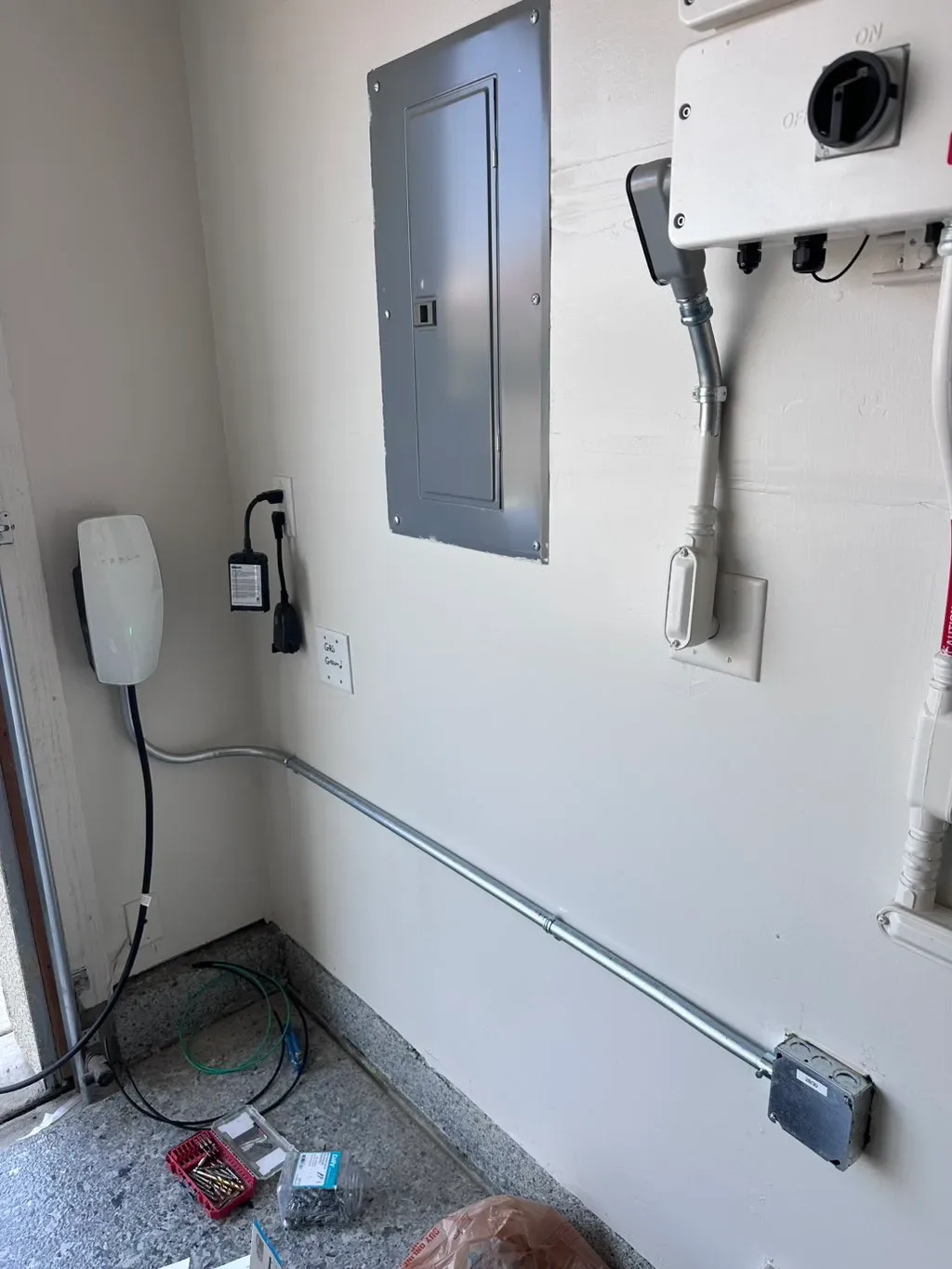
Home EV charger installed by Litel Electric in a Sacramento garage

Available 24 hours

Licensed C-10 · CSLB #1115460

Emergency electrical
5 sections
  1. Which EV charger rebate
  2. What does SMUD’s rebate
  3. Why can the rebate-qualifying charger be smaller than the one you were quoted
  4. If PG&E serves you,
  5. What paperwork needs

The EV charger rebate you can get depends on who serves your meter, and in parts of the region on who supplies your power. Around Sacramento that is one of three utilities, plus two community energy programs on PG&E bills. Their rules are different, and in one case close to opposite, so it pays to know which one you are on before you pick a charger.

Which EV charger rebate can you get at your address?

Look at your electric bill. The company on it is the one that matters.

  • SMUD serves most homes in Sacramento County. Its rebate is Charge@Home
  • Roseville Electric serves most homes inside Roseville. It has its own Level 2 charger rebate
  • PG&E serves most homes in Placer, El Dorado and Yolo counties outside Roseville, including West Sacramento. It has a residential EV charging rebate with its own eligibility rules
  • Pioneer Community Energy or Valley Clean Energy may appear on a PG&E bill as the company that supplies your power. More on that below

Service areas do not follow city limits exactly, so go by the bill rather than the town.

What does SMUD’s rebate require from the charger and the install?

SMUD’s Charge@Home has four requirements that affect the install:

  • The charger must be on SMUD’s qualifying list. Hardwired and plug-in chargers can both qualify
  • The charger’s output and the breaker are capped. The charger has to be set to a maximum output, on a breaker no larger than SMUD allows
  • A building permit has to exist. You send a copy of the permit with the application. The final inspection does not have to be done yet
  • Installation incentives go through SMUD’s Contractor Network. The installer has to be enrolled in that network for the installation part of the rebate

SMUD revises the numbers, so read the current Charge@Home terms and the qualifying charger list before you buy. Ask any installer you are comparing whether they are in the Contractor Network, and get the answer before you sign.

SMUD also lists circuit-sharing and energy-management devices that can avoid a panel upgrade, with incentives on some of them. Load management explains how those work.

Next step

Want the install to qualify for your rebate?

Tell us which utility is on your bill and the charger you are considering. We size the circuit and set the charger to match the program, pull the permit, and give you the paperwork the rebate asks for.

Why can the rebate-qualifying charger be smaller than the one you were quoted?

Many installers default to the biggest circuit the charger can use, so the car charges as fast as possible and there is room for a faster charger later. SMUD’s rebate goes the other way. It caps the charger’s output and the breaker size below that default.

For most daily driving, the capped setting still refills the car overnight. If you tow, drive long days, or want the fastest charging you can get, the bigger circuit can be worth more than the rebate. Decide before the breaker is picked, because a charger installed above SMUD’s limit does not qualify. We can size the circuit either way; tell us at the estimate which one you want.

Roseville Electric’s rebate works nearly the opposite way. It sets a minimum size for the charger rather than a maximum, wants a listed wall- or pedestal-mounted unit, and has an application window that starts when you buy the charger. Check the Roseville Electric EV page for the current terms before you buy.

If PG&E serves you, why might the program be Pioneer’s or Valley Clean Energy’s?

In much of PG&E’s territory around Sacramento, two companies are involved in your electricity. PG&E owns the lines and the meter, reads the meter, and sends the bill. A community choice program buys the power and runs its own customer programs. Those programs are called CCAs (community choice aggregators).

  • Pioneer Community Energy serves Auburn, Colfax, Lincoln, Loomis, Rocklin, Placerville and unincorporated Placer and El Dorado counties. Pioneer does not run its own charger rebate. It points its customers to PG&E’s programs and to its Incentive Finder
  • Valley Clean Energy serves Davis, Woodland, Winters and unincorporated Yolo County. It runs its own EV program, aimed at lower-income customers and renters. Check Valley Clean Energy’s credits and rebates page for what is open

West Sacramento is on PG&E without a CCA. Customers can also opt out of Pioneer or Valley Clean Energy, so a neighbor may be on a different program. Your bill shows which one you have. Whatever the program, PG&E still handles anything at the meter, like a disconnect for a panel change.

What paperwork needs to be done before you apply?

For SMUD, you need the building permit. That means the permit is pulled before or during the install, not after. The invoice also has to show the charger’s setting so SMUD can see it meets the cap.

Every city and county in California has to run a streamlined permit process for EV chargers, including one charger at a house. We pull the permit with the city or county that covers your address and book the inspection. You get the permit number and an invoice that lists the charger, its output setting and the breaker size.

Keep the charger receipt too. Roseville’s rebate counts its window from the purchase date, and most programs ask for proof of purchase. If you are ready to plan the install around the rebate, start with EV charger installation.

Sources

Get estimate

Tell us what is happening, or what you are planning. We read the details, tell you what else we need to know, and explain the next step before anything is scheduled.

  1. 01

    You send the problem or the plan, with the address if you have it.

  2. 02

    We reply with what it involves and what has to be seen in person.

  3. 03

    Nothing is scheduled, and nothing is priced, until the equipment has been looked at.

License
CSLB #1115460 · C-10 electrical