
EV charging

Level 2 EV charger electrical requirements

Start with parking, charging needs, panel capacity, and the circuit route. The charger itself is only one part of the installation.

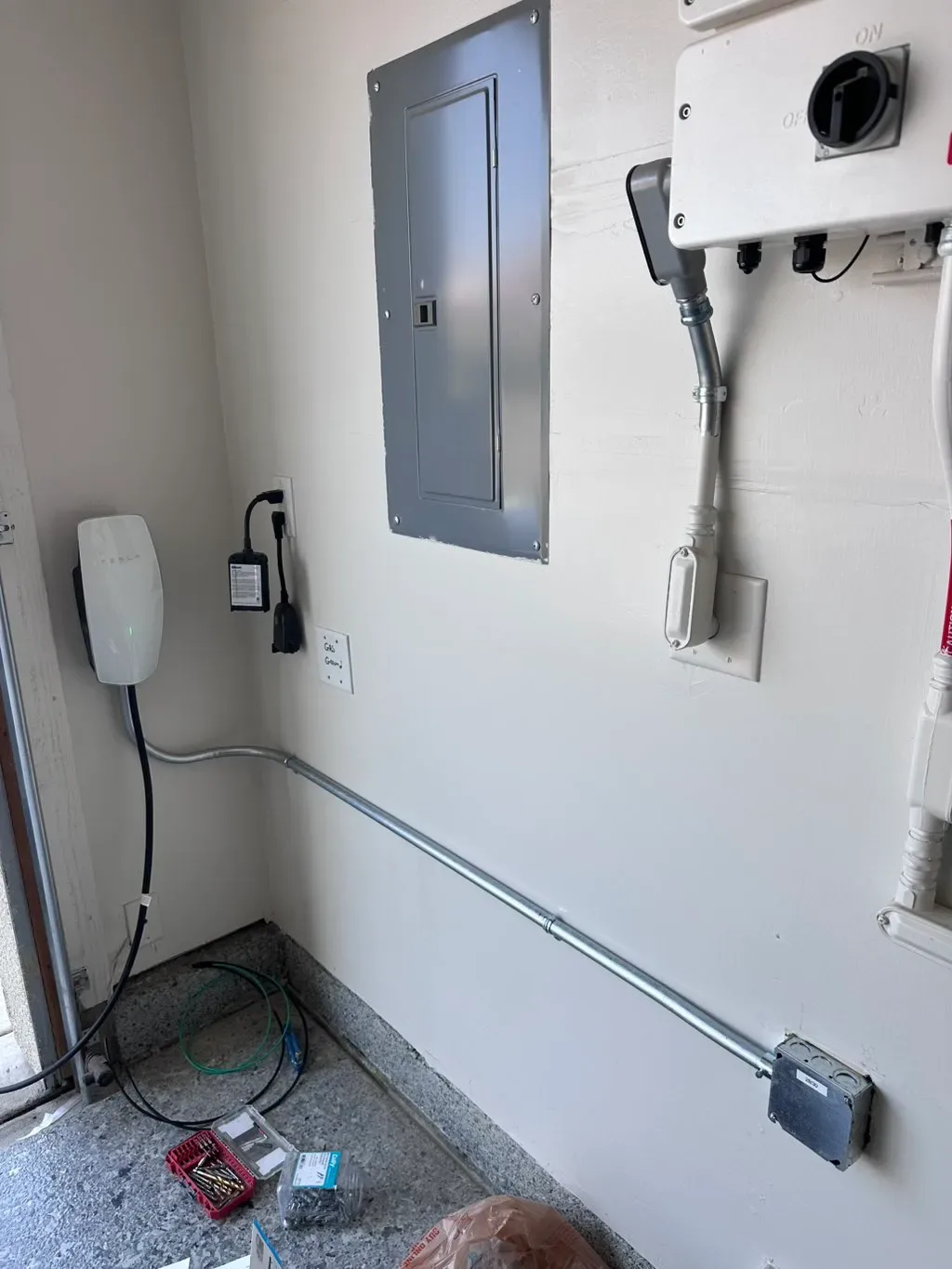
Home EV charger installed by Litel Electric in a Sacramento garage

Available 24 hours

Licensed C-10 · CSLB #1115460

Emergency electrical
5 sections
  1. At a glance
  2. How fast
  3. Where it goes
  4. Panel and service
  5. Permit

A good home-charging plan starts with how you drive and where the car normally parks — not with which charger to buy. The equipment matters, but it should follow the electrical and physical realities of the property rather than lead them.

The planning order is:

parking and charging need → charger location → existing service and panel → circuit route → permit and inspection

Level 2 EV charger requirements at a glance

DecisionWhy it comes first
Daily driving and overnight windowFaster is not automatically better if a lower rate already refills the day
Where the car parksSets cable reach and the electrical route
Existing service and panelA crowded panel is not automatically replacement; empty spaces are not capacity
Circuit routeDistance, wall and ceiling access, exterior exposure, mounting surface
Permit and inspectionA charger circuit is permitted work from the start

How fast does a Level 2 charger need to be?

How far you drive in a day, how long the car sits at home, what the vehicle can accept, and how much range you want back by morning all shape the plan. Faster is not automatically better if a lower rate already refills what you use in a day. Bring the vehicle details and the specs for any charger you are considering to the electrical evaluation.

Where should the charger go?

The charger should reach the car where it normally parks without running the cable across a walkway. Think about which side the charging port is on, whether a second parking position might matter later, and where the cable lives when it is not plugged in. Location also sets the electrical route: distance from the panel, wall and ceiling access, exterior exposure, the mounting surface, and physical protection can matter as much as which charger you pick.

Next step

Get the charger position settled first

Send where the car parks, the charger you are considering, and a photograph of the panel with the door open. Those three decide most of the installation.

Can the existing panel and service handle the charger?

A charger is a large, sustained load, not another outlet. The existing service, the panel, the major loads already on it, and the room left in the circuit plan all have to be weighed together. A crowded panel does not automatically mean replacement, and empty spaces do not prove there is capacity to spare. Whether the service can carry it is a panel upgrade decision; a genuine shortfall is a 200-amp service upgrade; a charger in a detached garage often starts with a garage subpanel.

The evaluation needs the existing service and panel information, the major electrical loads already in use, the preferred charger location and route, the vehicle and charger electrical requirements, and any other planned electrical work. Those facts decide the circuit before anyone buys a unit.

Does a Level 2 EV charger need a permit and inspection?

A charger circuit is permitted and inspected. Those steps belong in the scope from the start, not tacked on at the end. If panel or service work is also on the table, planning both together avoids assumptions that later collide.

Keep the panel accessible, and park the car where it normally sits if you can. Have the charger and vehicle details on hand — but do not buy adapters, breakers, or panel equipment off an online list first. Photograph where you would like the charger, and note any finished areas the route may cross.

The scope should answer where the charger will mount, what circuit route is practical, how the load fits the existing service, what equipment is included, what access or finish work falls outside the electrical scope, and which permit and inspection steps apply. Clear answers to those are worth more than any product comparison page.

Level 2 EV charger electrical work in Sacramento: what to do next

The charger itself is only one part of the installation. For Sacramento-area homes, Litel Electric can review where the car parks, the existing panel and service, the circuit route, and the intended charger before equipment is purchased. See EV charger installation. Call (279) 972-9272.

Sources

Get estimate

Tell us what is happening, or what you are planning. We read the details, tell you what else we need to know, and explain the next step before anything is scheduled.

  1. 01

    You send the problem or the plan, with the address if you have it.

  2. 02

    We reply with what it involves and what has to be seen in person.

  3. 03

    Nothing is scheduled, and nothing is priced, until the equipment has been looked at.

License
CSLB #1115460 · C-10 electrical