
Panels

When does an electrical panel need replacement?

A panel earns replacement for what it is and what it does, not the date on the label — failing or obsolete equipment, damaged bus or terminations, a service the house has outgrown, or a fault with no safe repair path.

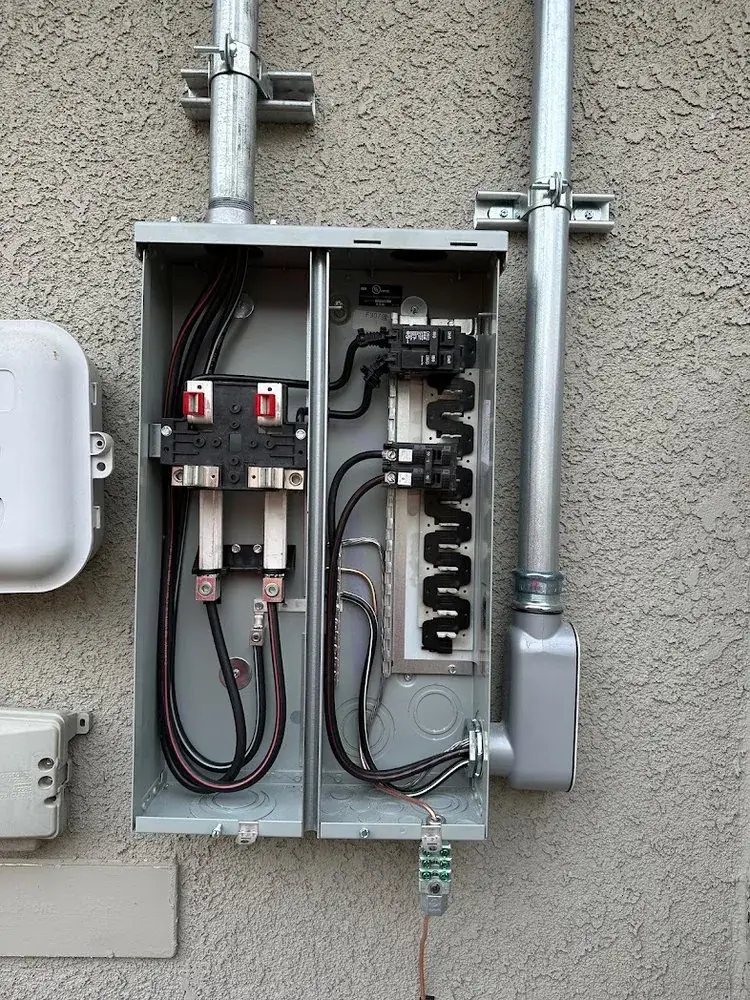
Replaced main service panel with new breakers and labeled circuits

Available 24 hours

Licensed C-10 · CSLB #1115460

Emergency electrical
4 sections
  1. Start with the symptom
  2. What to document
  3. Repair and upgrade
  4. What to clarify

Your panel is where the incoming service splits into the circuits that feed the property. Replacing it is sometimes the right call — but a single symptom does not prove the whole panel is the problem. A sound decision starts with the equipment that is actually in there and the conditions around it.

Age alone settles nothing. What decides it is the equipment, the condition of the bus and terminations, the capacity the house now asks for, and whether a repair path still exists.

Start with the symptom, not the age

Older equipment is worth attention, but age by itself does not define the work. Breakers that trip in ordinary use, visible corrosion, heat damage, loose or damaged components, and parts nobody makes anymore can all change the repair path. So can what you plan to add: an EV charger, an HVAC change, a kitchen project, an addition, or a broader remodel can expose limits that never showed up in normal use.

And some symptoms begin outside the panel. A branch circuit, a connected appliance, a loose device, or a damaged conductor can all trip a breaker. That is why “replace the panel” should not be the first answer to every trip.

What conditions should you document?

  • Which breaker trips, and what is running when it happens?
  • Does any device, panel area, or wall surface feel unusually warm?
  • Is there buzzing, a burning odor, discoloration, rust, or moisture?
  • Has electrical equipment been added since the panel was installed?
  • Is a remodel or major new load already being planned?

Do not remove the panel cover to gather any of this. A photo of the closed panel and its directory, plus a written list of symptoms, is enough to start the conversation.

Next step

Have your panel looked at

Send a photograph of the panel with the door open and any amperage figure you can read on it, plus what has been tripping or feeling warm. The condition inside decides the rest.

Repair, upgrade, or replacement?

PathWhat it isWhen it fits
RepairA specific failed part or connectionThe equipment around it still supports a dependable repair
UpgradeThe capacity decisionThe home actually needs more capacity — and the answer is sometimes no
200-amp service upgradeIncrease service capacity to 200AAfter that need is established
SubpanelMore breaker spacesThe service still has capacity
ReplacementThe existing panel itself warrants replacementThe project is not primarily a service-capacity increase

Those paths are upgrade, 200-amp service upgrade, subpanel, and replacement. Online, these words get used interchangeably. On site, the difference comes from the actual equipment, the loads connected to it, the conditions that can be seen, and the permit or utility coordination the property needs.

What should a panel evaluation clarify?

A panel conversation should leave you with more than a model number. It should pin down the existing service and panel, the symptoms or planned loads driving the work, any grounding or feeder conditions visible during the evaluation, and the next decision to make. If replacement is recommended, the scope should explain what is included and what still depends on the utility, the permit, or conditions no one can see yet.

Panel replacement in Sacramento: what to do next

A single symptom does not prove the whole panel is the problem. For Sacramento-area homes, Litel Electric can evaluate the equipment, condition, capacity, and repair path, then define whether the job is a repair, a panel replacement, or a capacity change.

Call (279) 972-9272.

Sources

Get estimate

Tell us what is happening, or what you are planning. We read the details, tell you what else we need to know, and explain the next step before anything is scheduled.

  1. 01

    You send the problem or the plan, with the address if you have it.

  2. 02

    We reply with what it involves and what has to be seen in person.

  3. 03

    Nothing is scheduled, and nothing is priced, until the equipment has been looked at.

License
CSLB #1115460 · C-10 electrical