
Panels

Zinsco electrical panels: identification, risks, and replacement

How to identify a Zinsco or GTE-Sylvania panel, the breaker-to-bus failure mode behind the safety reputation, why new breakers are not the fix, and how a Sacramento replacement and permit work.

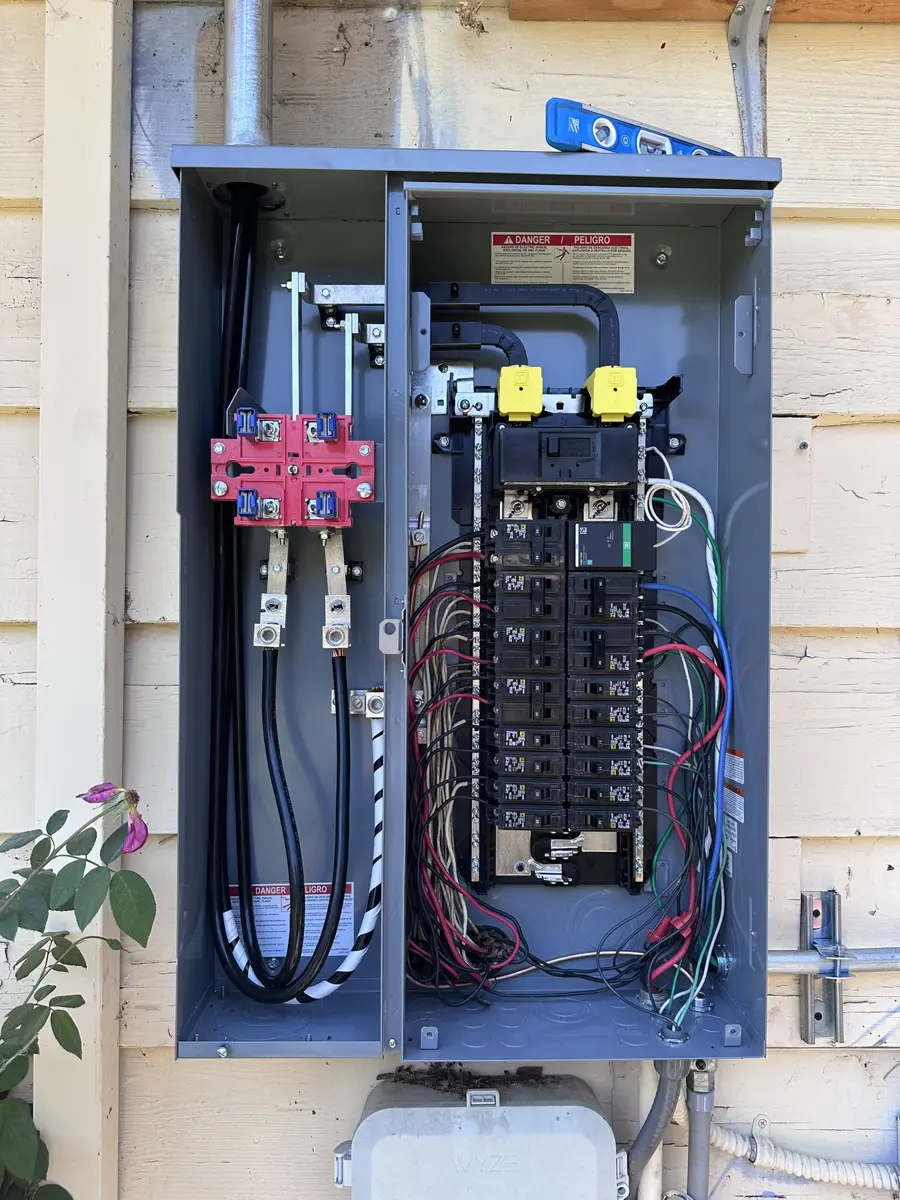
Open electrical panel checked for heat marks on the bus and the breakers that clip to it

Available 24 hours

Licensed C-10 · CSLB #1115460

Emergency electrical
9 sections
  1. How do you identify a Zinsco
  2. Why do Zinsco panels fail
  3. Is there a recall?
  4. Just replace breakers?
  5. Emergency replacement
  6. Panel vs service
  7. Insurance and sales
  8. Sacramento permit
  9. What decides cost

A Zinsco panel is an electrical panel made by Zinsco, and the same lineage sold later under GTE-Sylvania and related brands, common in houses built from the 1950s through the 1970s. Two things drive the questions people bring here: the panels have a documented failure mode at the connection between the breaker and the bus, and many insurers and home inspectors now flag the equipment. What follows is how to identify one, what actually fails, why swapping breakers does not fix it, and how a replacement and its permit work in Sacramento. This is a general explainer, not a diagnosis of your panel.

Identify it by nameplate and bus, not the neighborhood. Swapping breakers is not the fix; replacement with listed equipment is.
SituationWhat it isStarting point
Nameplate says Zinsco, GTE-Sylvania, or Sylvania-ZinscoEquipment identificationPhotos of the door-open panel, nameplate and breaker faces
Breakers that clip to a flat aluminum busThe design behind the failure modeEvaluation of that specific panel, not a brand verdict
New or old-stock breakers on the old busNot a complete fixReplacement with listed equipment
Listed modern panel in the same locationPanel replacementPermit, utility disconnect and reconnect, new directory
Mast, meter, or grounding has to moveA service change, a different jobUtility at the address: SMUD, Roseville Electric, or PG&E
Insurer or inspector flagged the panelUnderwriting or a sale findingUnderwriting is separate from a building-code trigger

How do you identify a Zinsco or GTE-Sylvania panel?

The nameplate and the bus settle it, not the street. The label inside the door may read Zinsco, GTE-Sylvania, Sylvania-Zinsco, or a related name; the design is confirmed by how the breakers clip into deep slots onto a flat bus bar rather than bolt or snap to a modern one, and Zinsco-design breaker toggles are often a distinctive pale color. An inspector’s note or an insurer’s letter is a good reason to look, but the equipment in front of you decides — so the first useful thing you can send is a photo of the panel with the door open, the nameplate and breaker faces especially.

Brand alone is not the whole answer. Not every Sylvania-labeled panel is a Zinsco-design panel; some Sylvania panels are essentially a Zinsco design in Sylvania branding, and others are not. That is exactly why identification is done by the equipment — the bus design and breaker connection — rather than by condemning a name wholesale.

Why do Zinsco panels fail?

The concern is not cosmetic and it is not really about the breaker’s tripping mechanism alone. It is the connection between the breaker and the bus it clips to.

The breaker-to-bus connection

Zinsco-design breakers connect to the bus through a clip. Independent inspection references describe arcing and overheating at that connection, which over time damages the bus, the breaker, and the joint between them, so the electrical contact becomes unreliable. Thermal cycling and, in outdoor panels, valley heat, dust, and moisture make that worse. On mid-century Sacramento houses the panel often sits outside, which is hard on the connection and the aluminum components inside.

Breakers that do not trip

The failure that gives these panels their reputation is a breaker that does not trip when it should. Independent testing has reported that a substantial share of Zinsco-design breakers — on the order of a quarter to a third in one commonly cited study — failed to trip under overload test conditions, far above the failure rate reported for modern breakers. In the worst case a breaker can fuse to the bus, so it reads as off or switches on and off while the circuit stays energized. Because this develops inside the panel, a Zinsco panel can look clean, show no burn marks, and still carry the risk.

Is there a Zinsco panel recall?

No. There is no formal CPSC recall of Zinsco panels. That is worth stating plainly, because “recall” is often assumed. The reputation rests on documented failure modes and independent testing, not on a recall order. The absence of a recall is not evidence the equipment is fine, and the presence of documented failures is not a recall — both things are true at once, and the decision to replace is made on the condition and design of the specific panel, not on a regulator’s list.

Do replacement breakers fix a Zinsco panel?

No, not as a complete fix. The bus is the part carrying the load, and a new breaker clipped to a worn or damaged bus does not change the connection that is the problem. Buying old-stock Zinsco breakers to swap in has the same limit. Where the equipment is the concern, the durable repair is replacement with a modern listed panel and breakers listed for that panel, not a breaker-by-breaker substitution on the old bus.

Does every Zinsco panel need emergency replacement?

Not automatically, and not on the brand name alone. A Zinsco panel is a strong candidate for replacement, but whether yours needs it now, and whether it is an emergency, depends on the condition of that panel — heat damage, melted breaker cases, evidence of arcing at the bus, breakers that will not come off cleanly — and on what the house now demands of it. What that means in practice:

  • Look at the actual panel, not the neighborhood or the label alone. Photos of the door-open panel, the nameplate, and the breaker faces are where an evaluation starts
  • Heat marks, melted cases, a burning smell, or breakers that will not seat or release are reasons to stop using the circuit and have it looked at promptly
  • A panel that looks clean is not cleared by looks — the failure develops inside — so an inspector or insurer flag is a legitimate reason to evaluate even with no visible damage
Next step

Have a Zinsco panel checked

Send photos of the panel with the door open — the nameplate and breaker faces especially — with your address, or call and describe it.

Is a panel replacement the same as a service upgrade?

No. A panel replacement swaps the panel and breakers in the same location on the same service. A service change — moving or upgrading the mast, meter base, service conductors, or grounding, or raising the amperage — is a larger job, and that part waits on the utility at the address: SMUD, Roseville Electric, or PG&E. A Zinsco panel can be replaced without upgrading the service, or the two can be done together if the load calculation or the condition of the service equipment calls for it. Counting the circuits and running a load calculation is what tells the difference, so the quote is a panel replacement or a service change, not a guess.

Zinsco panels, insurance, and home sales

Insurers and home inspectors treat Zinsco panels as a known concern. Many carriers decline or surcharge coverage, or ask for replacement before they will bind or renew a policy, and home inspectors routinely flag the equipment at a sale. Keep the categories separate: an underwriting requirement from an insurer, and a finding on a pre-sale inspection report, are not the same as a building-code requirement created by permitted work. A letter from a carrier is an underwriting decision; a building permit is triggered by the work you choose to do. Both can point at the same replacement, but they are different processes, and it helps to know which one you are answering. If the reason you are here is an insurer’s letter, that path starts at insurance corrections.

How does the Sacramento permit process work for a panel replacement?

A residential electrical panel replacement is permitted work with the building department for the job address. The permit is pulled, the utility disconnect and reconnect are coordinated by address, the new listed panel is set with breakers listed for that panel, the circuit directory is rebuilt, and the work is inspected. If the property is in unincorporated Sacramento County rather than the City of Sacramento, the County permit process applies instead — a Sacramento mailing address does not by itself mean the property is inside the City.

The install itself is often a day once it is scheduled. The wait is usually the permit and the utility coordination, not the work.

What decides the cost of a Zinsco panel replacement?

There is no single price, because this is not always a straight swap. Cost moves with the scope of the actual job, not the brand on the label. The factors that change it: whether it is a like-for-like panel swap in the same location or also a service change; the amperage and the load calculation; the condition of the mast, meter base, and grounding; how the utility disconnect and reconnect are handled at that address; the permit and inspection process for the jurisdiction; and any corrections found once the panel is open. A modern listed panel in the same location is one job; a service change is another, and that part waits on the utility. There is no flat price for it — the scope has to be seen before a number means anything.

Zinsco panel replacement in Sacramento

These panels turn up in 1950s–1970s houses in Arden-Arcade, Carmichael, Citrus Heights, and older Rancho Cordova — but the nameplate settles it, not the neighborhood. You might be here because an inspector wrote “Zinsco,” or an insurer asked, or a breaker is not behaving.

Send photos of the panel with the door open — the nameplate and breaker faces especially — with your address. Litel Electric can confirm the equipment, evaluate its condition, pull the permit, coordinate the utility, and replace the panel with listed modern breakers.

If the reason is an insurer’s letter, start at insurance corrections.

Call (279) 972-9272.

Zinsco panel FAQs

How do I know if I have a Zinsco panel?

Open the panel door and read the nameplate — it may say Zinsco, GTE-Sylvania, or Sylvania-Zinsco — and look at how the breakers connect to the bus. A photo of the door-open panel and the breaker faces is the fastest way to have it confirmed.

Is every Sylvania panel a Zinsco panel?

No. Some Sylvania-labeled panels use the Zinsco design and some do not. That is why identification is done by the bus and breaker connection, not by the brand name alone.

Was there ever a Zinsco recall?

No formal CPSC recall was issued. The concern comes from documented failure modes and independent testing, not from a recall order.

Can I just replace the breakers in a Zinsco panel?

Not as a complete fix. The bus and its connection to the breaker are the problem, so a new breaker on the old bus — new or old-stock — does not resolve it. Replacement with a listed modern panel is the durable repair.

Does a Zinsco panel need to be replaced immediately?

It depends on the condition of the specific panel and how it is loaded. Heat marks, melted cases, a burning smell, or breakers that will not seat or release are reasons to stop using the circuit and have it evaluated promptly; a panel that looks clean should still be evaluated because the failure develops inside.

Will my insurance company make me replace a Zinsco panel?

Some carriers decline, surcharge, or require replacement before binding or renewing. That is an underwriting decision, separate from a building-code requirement. If a letter is the reason, start with insurance corrections.

Do Zinsco panels only turn up in older neighborhoods?

They are common in 1950s–1970s houses, but the nameplate settles it, not the neighborhood. Boom-era originals in newer areas are usually a different panel family — and a mid-century house may already have had its panel replaced.

Sources

Get estimate

Tell us what is happening, or what you are planning. We read the details, tell you what else we need to know, and explain the next step before anything is scheduled.

  1. 01

    You send the problem or the plan, with the address if you have it.

  2. 02

    We reply with what it involves and what has to be seen in person.

  3. 03

    Nothing is scheduled, and nothing is priced, until the equipment has been looked at.

License
CSLB #1115460 · C-10 electrical