
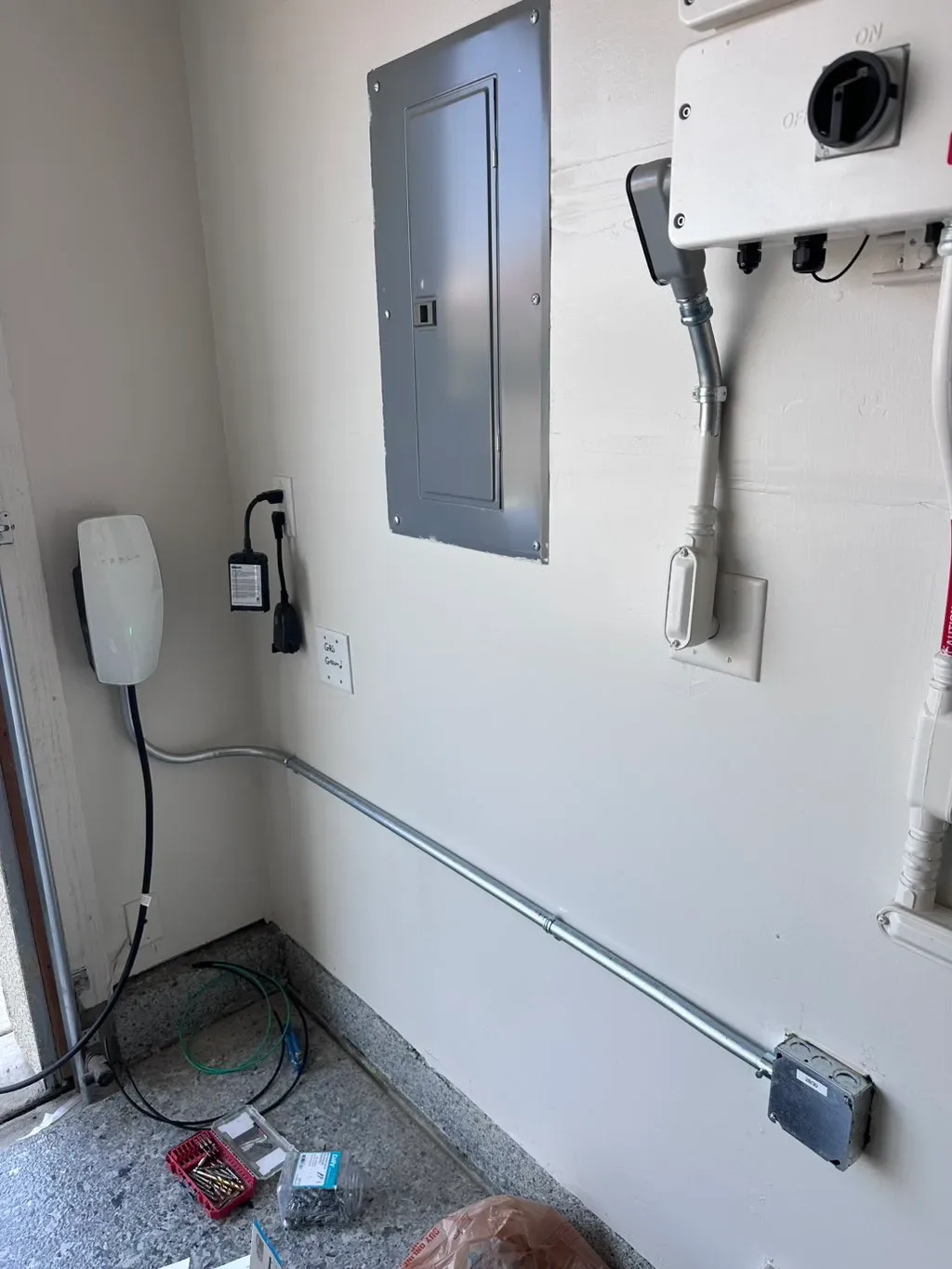
During the walk-through, find out exactly what will stay in the garage. Ask the seller to identify the station, charging cable and any adapter included in the sale, then put that list in writing. A charging handle on the wall today could leave with the seller’s portable unit on moving day.
Charger records and app access to get from the seller
Get the model name, manual and any permit paperwork from the seller. If the charger uses an app, have the seller show you any schedule or access restriction they’ve set. Use the manufacturer’s ownership-transfer process so you can manage those settings from your own account.
Checking connector compatibility and cable reach
Check the station’s connector against your car manufacturer’s home-charging guidance. If you need an adapter, verify it’s approved for that car and station. Then park as you normally would. Does the cable reach the charge port without stretching across the garage entrance?
Checking an existing charger outlet before overnight charging
If only an outlet remains from the previous EV charger, send us your portable charger’s model and any installation paperwork the seller left. We can check whether that circuit and outlet are suitable for overnight charging. If the station stays but its installation history is unclear, or the cord or enclosure looks damaged, leave it unused until we inspect it. We can check whether the equipment and circuit can stay in service, or what has to change to use your chosen charger.
If the existing EV charger fits your car, is in suitable condition and only the account is stuck, start with the manufacturer’s support team. If a different station or circuit is needed, arrange an EV charger installation assessment.