
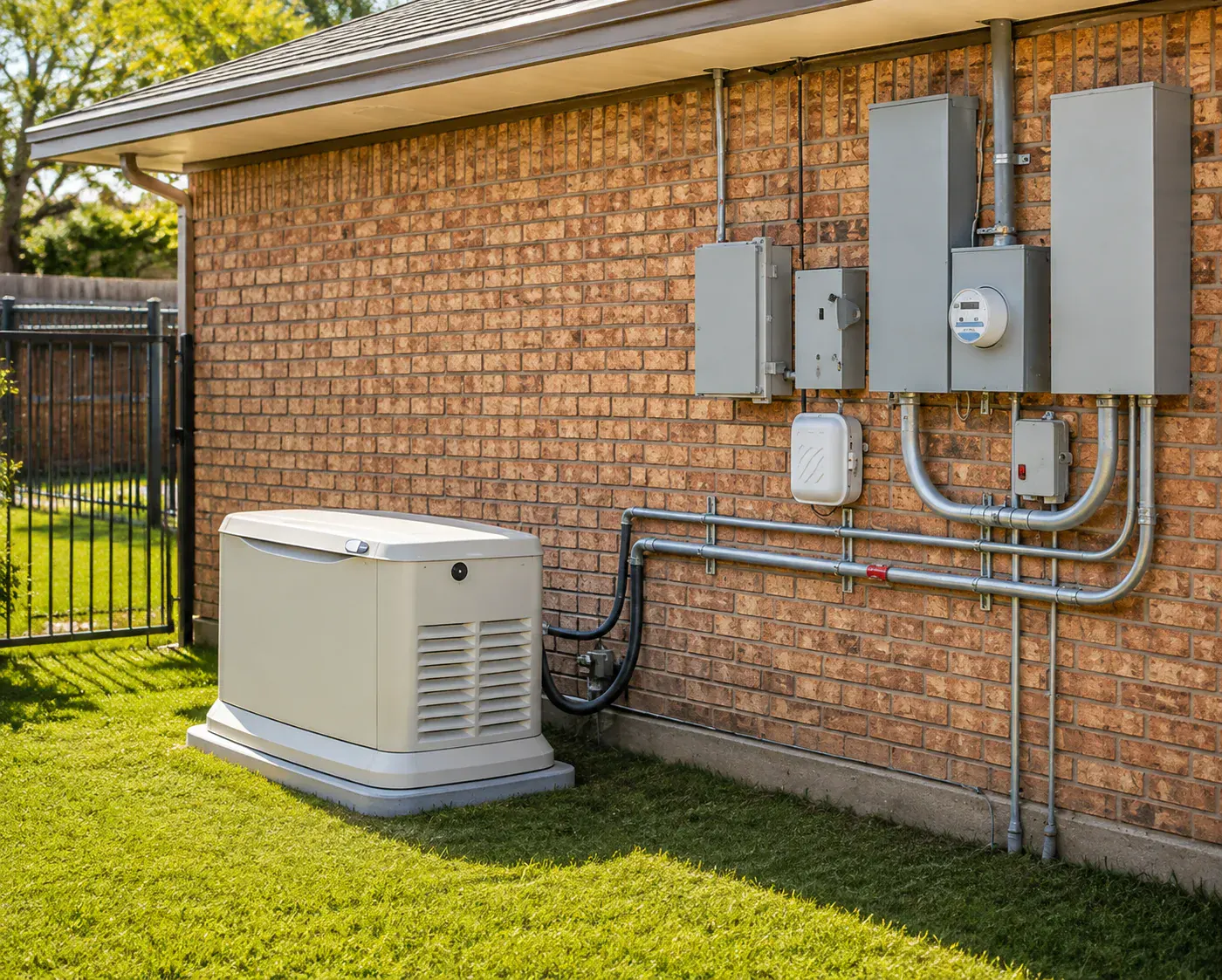
Yes, your solar panels may have years of useful life left when you decide you want backup power. You can often add a battery to an existing solar installation. Start with the model of your solar inverter, the equipment that turns the panels’ output into electricity for the house. It helps determine whether you can keep that inverter when you add storage.
Can you keep the inverter you already paid for?
Often yes. One option is an AC-coupled battery. Your existing solar inverter continues to supply power from the panels, and the battery has its own inverter for charging and discharging. Ask the installer to confirm that the proposed battery system will work with your existing solar equipment.
One of the options is to replace the existing inverter with one that manages both the panels and the battery. If the original inverter is already due for replacement, we can quote that replacement separately.
Will the panels charge the battery during a power cut?
That depends on how the two systems are connected and set up to work together. When the house disconnects from the utility, ordinary grid-connected solar usually shuts down in an outage. Some retrofits can keep selected circuits on using the battery’s stored charge, even though the panels cannot recharge it until the grid returns.
Which solar records do we need for a battery retrofit estimate?
Your original solar agreement or installation plan may list the inverter model in the system specifications. If the equipment is leased, check with the owner before agreeing to changes. For a system you own, check which warranties cover the equipment that stays and who handles a fault after the battery is added, as some warranty terms may require using only the original equipment that was bundled with the solar panels.
When you consider adding home battery storage, show us the documentation you have left from the solar panel installation job, or we can try to identify the model during a visit.