
Start with your stall number and the document that assigns it to your unit. Your first request can be as simple as this:
I own unit [unit number] and park in assigned space [stall number]. I’d like to install a charger for my car. Could you send me the application, the building’s charging requirements and any parking plan I can share with my electrician? Who can arrange access to look at the route to my space?
Parking records and HOA application forms for a condo charger
Your property manager can provide the parking plan, the association’s architectural application and any drawings from earlier charger installations. If the garage has numbered stalls, check that your deed, parking assignment or association records identify yours. A number painted on the floor helps us find your stall. The parking record tells the board which space your request covers.
California law protects an owner’s ability to install charging in a designated space, including one specifically assigned to that owner. The association can impose reasonable restrictions. If its approval is required, it handles the request through its architectural review process and gives its decision in writing. California Civil Code § 4745, printed pages 252–253.
What will the board need to see on the electrical plan?
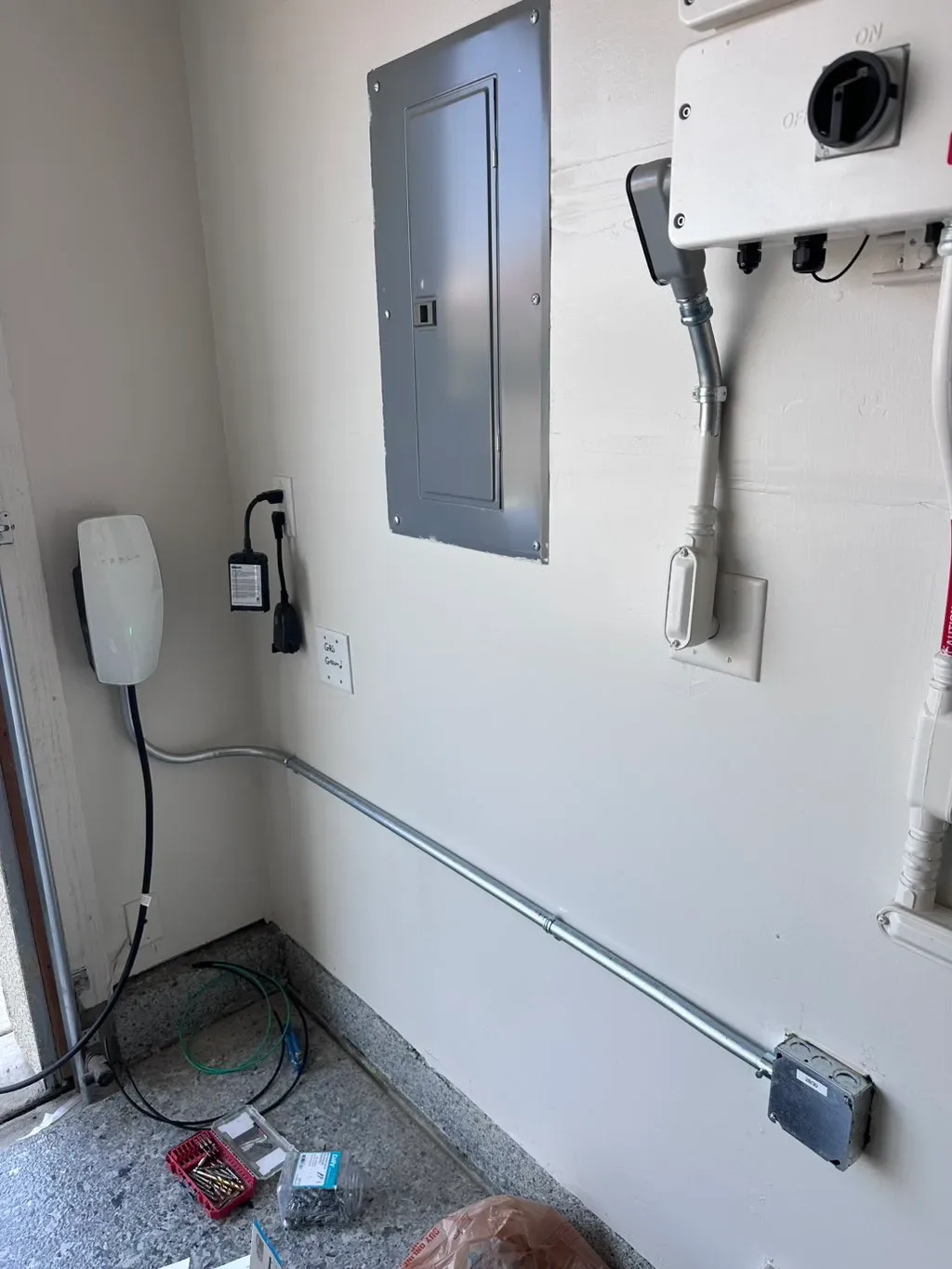
Arrange for the building manager to let us into the electrical room. From there we can trace a route to your stall and mark the starting panel, shared walls or ceilings we’d cross, and the charger location on the plan. Park where you normally would so we can show where the cord will hang and whether anyone would have to step over it.
We’d identify which meter would record the charging. If the circuit can use your unit’s metered supply, we’d label it on the drawing. If it would use the building’s shared account, the manager needs to tell you how the association measures and bills for charging. We can use that answer when choosing equipment.
What to include in the HOA charger application
Send the completed application with the parking record, our drawing and proposed electrical work. For a station in common or exclusive-use common space, California law sets out written owner commitments, including using a licensed contractor, following the association’s architectural standards and paying for the installation and electricity. Ask the manager which insurance certificate to provide and send those requirements to your insurer. Once the installation is approved, send the association the certificate and keep a copy with your approval and maintenance agreement.
Send us any question about the supply or cable route so we can clarify the drawing. A question about who controls a wall or parking space belongs with the association. If the board wants chargers for several residents, it can consider shared charging for the building separately.
When you’re ready to arrange a visit for your own space, send Litel your Sacramento-area building address, stall number and the manager’s installation requirements. Those details let us plan the EV charger installation assessment around access to your garage.