
EV charging

Hardwired or plug-in EV charger: which should you install?

A plug-in charger on a 14-50 needs GFCI protection, and that can trip it at night. Why we usually hardwire, when plug-in still makes sense, and how the rebate fits.

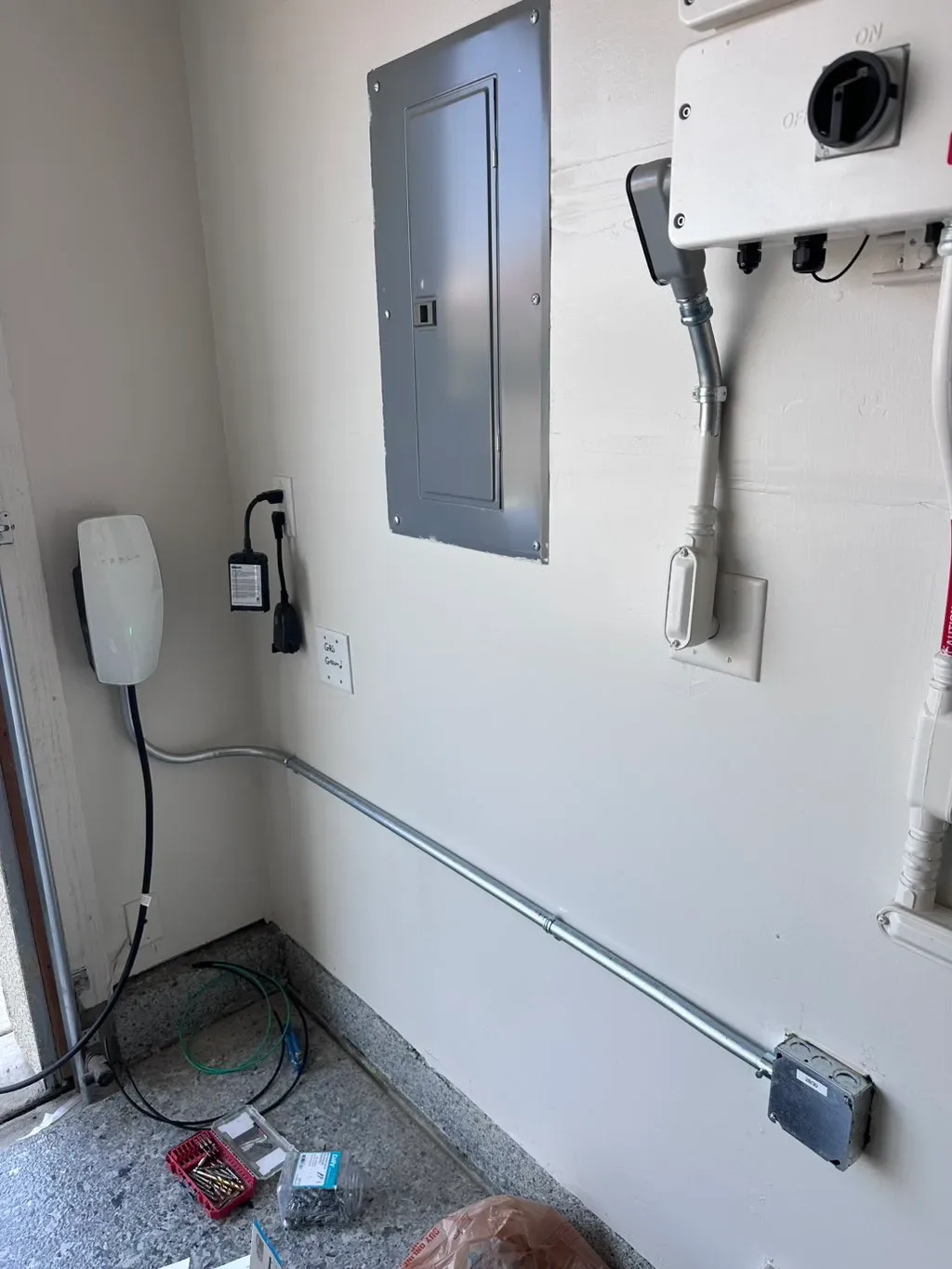
Home EV charger installed by Litel Electric in a Sacramento garage

Available 24 hours

Licensed C-10 · CSLB #1115460

Emergency electrical
5 sections
  1. EV charger be hardwired
  2. Why does a 14-50 for a car
  3. Why do plug-in chargers trip
  4. When does plug-in still make
  5. Which one you pick matters

Most Level 2 chargers come in two versions, or one version that can go either way. A plug-in charger has a cord and a plug that goes into a 240-volt outlet, usually a NEMA 14-50. A hardwired charger is wired straight to its own circuit with no plug. The box usually says either is fine. The difference shows up later, when your car is charging in the garage.

Should your EV charger be hardwired or plugged into a 14-50?

For a charger that is going to stay where the car parks, we usually recommend hardwiring. It removes the outlet, which removes the most common reasons a plug-in charger trips or wears out, and many chargers allow a higher charging setting when hardwired than when plugged in.

The charger’s installation manual will say what is allowed. It says which outlet it can plug into, what circuit each setting needs, and whether it has to be hardwired above a certain setting. We size the circuit from that manual and from where the car parks.

Why does a 14-50 for a car need GFCI protection?

Because the electrical code asks for it twice. A 240-volt outlet in a garage or outdoors at a house needs GFCI protection. Separately, any outlet installed for EV charging needs it, wherever it is. California’s current electrical code carries both rules, and the inspector will look for the protection on a new charging outlet.

A GFCI (ground-fault circuit interrupter) cuts the power when some current leaks out of the circuit through a path it should not take, like a damaged cord or a wet connection. For a plug-in charger that usually means a GFCI breaker in the panel.

Next step

Deciding between hardwired and plug-in?

Send the charger you are considering, where the car parks, and a photo of the panel with the door open. The charger's manual and the parking spot decide the circuit.

Why do plug-in chargers trip a GFCI breaker?

Because the charger already has its own ground-fault protection. Listed Level 2 chargers carry a built-in device that does the same job for the charging cable and the car. It is set to trip at a higher level of leakage than a GFCI breaker.

Put a GFCI breaker in front of that charger and you have two ground-fault devices in a row, set to different levels. Normal small leakage during charging can be enough to trip the breaker even when the charger’s own protection sees nothing wrong. You find the breaker off in the morning and the car half charged.

If that is happening now, the guide to an EV charger that keeps tripping goes through the other causes to rule out first. When the outlet is the problem, hardwiring the charger is a common fix: the outlet comes out, the GFCI requirement for the outlet goes with it, and the charger’s own protection does the job.

When does plug-in still make sense?

When you want to take the charger with you. If you rent, or expect to move in a year or two, a plug-in charger unplugs and goes with you to the next house. It also makes swapping to a new charger a plug-in job rather than a wiring job, which makes future upgrades easier.

If you go plug-in, the outlet matters. A charger pulls current for hours every night, and a cheap outlet heats up at the contacts. A Sacramento garage already runs hot in summer, and a worn 14-50 under nightly charging can melt or discolor at the plug. If the outlet or plug is warm, brown or misshapen, stop charging on it until it is looked at. We install an EV-rated 14-50 with the GFCI protection it needs, tightened to the maker’s torque, and we tell you what to watch for.

Which one you pick matters for the SMUD rebate

SMUD’s Charge@Home rebate accepts either a hardwired or a plug-in charger, as long as the charger is on SMUD’s qualifying list. What it does limit is the charger’s maximum output and the breaker size. Those limits are lower than many installers default to. SMUD’s Charge@Home terms have the current numbers.

A hardwired charger set to SMUD’s limit meets the rebate and avoids the outlet GFCI problem at the same time. If you want the rebate, tell us at the estimate and we size the breaker and set the charger to match. If PG&E, Roseville Electric or a community energy program serves you, the EV charger rebate guide covers what applies.

Either way, the charger circuit is permitted and inspected. We pull the permit, the inspector signs off the circuit, and you get a charger that stays on through the night. Hardwired EV charger installation starts with a photo of the panel and where the car parks.

Sources

Get estimate

Tell us what is happening, or what you are planning. We read the details, tell you what else we need to know, and explain the next step before anything is scheduled.

  1. 01

    You send the problem or the plan, with the address if you have it.

  2. 02

    We reply with what it involves and what has to be seen in person.

  3. 03

    Nothing is scheduled, and nothing is priced, until the equipment has been looked at.

License
CSLB #1115460 · C-10 electrical