
Troubleshooting

One room keeps losing power: what it usually means

If one room goes dark and the rest of the house is fine, the fault is usually on one branch circuit — a breaker, a hidden GFCI, or a loose connection. Call (279) 972-9272.

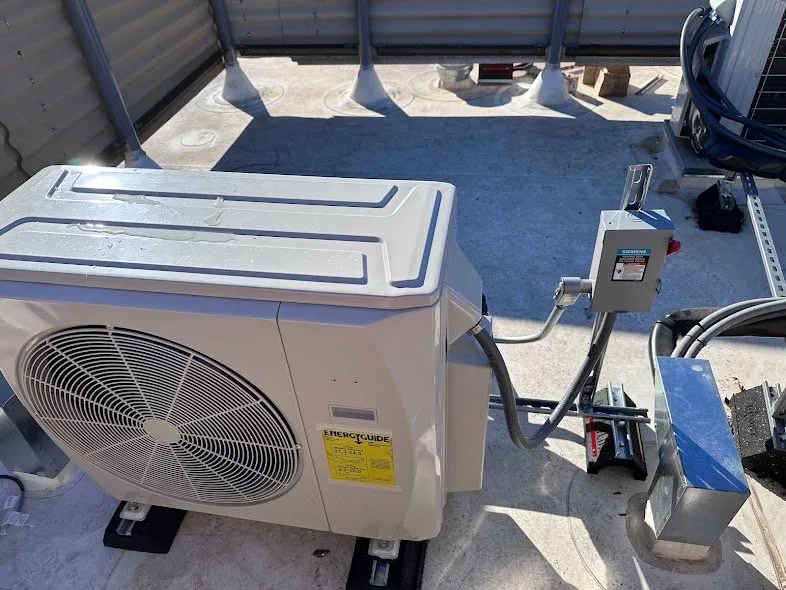
Air-conditioning disconnect installed on an exterior wall

Available 24 hours

Licensed C-10 · CSLB #1115460

Emergency electrical
10 sections
  1. Quick answer
  2. Whole room or part
  3. Protection devices
  4. Wiring and devices
  5. Breaker or panel
  6. After a change
  7. The room pattern
  8. What you can check
  9. Rewiring?
  10. The outage pattern

If one room keeps losing power while the rest of the house works normally, the problem is usually localized to one branch circuit or one connection feeding that area. If only one receptacle is dead, start at dead outlet, breaker on. The case here is a whole room — the lights and outlets on that circuit going together.

That does not necessarily mean the fault is physically inside the room. The failed point may be at the breaker, at a GFCI somewhere else, at an upstream outlet, at a switch, at a loose splice, at a neutral connection, or at a damaged section of wiring. The symptom appears in one place; the actual failure may be several connections upstream.

Reset the breaker once (fully OFF, then ON) and check for a GFCI elsewhere. If the room stays dead or power comes and goes, stop and have the circuit traced.

Quick answer: why does one room keep losing power?

The usual causes are a breaker that tripped but does not look fully tripped, a breaker that keeps tripping from overload, hidden GFCI or AFCI protection opening the circuit, a loose connection at an outlet or switch, a failed upstream receptacle, an open hot conductor, an open neutral, damaged wiring, a failed breaker, or a panel connection problem.

If the room repeatedly loses power and comes back later, that is especially important. Intermittent power can point to a loose or failing connection rather than a simple breaker trip.

First: is the entire room dead?

Before checking anything else, identify what actually lost power. A home is divided into multiple branch circuits, and one breaker may serve one bedroom, several bedrooms, bedroom receptacles, lighting only, or a mixture of nearby rooms. If one branch circuit opens, the rest of the house can remain completely normal. That usually means this is not a neighborhood outage and not necessarily a main-service problem. It is usually somewhere between panel → circuit protection → wiring → devices → room. The exact pattern matters more than the room name.

Lights and outlets are both dead. The room may be largely supplied by one branch circuit. Possible causes include the breaker, an upstream GFCI/AFCI, a loose circuit connection, or a branch-wiring problem.

Outlets are dead but ceiling lights still work. The receptacles and lighting may be on separate circuits. That points the investigation toward the receptacle circuit.

Lights are dead but outlets still work. The lighting may be on a separate circuit, or it may be controlled through a failed switch, fixture, or connection.

Only part of the room is dead. The room may be supplied by more than one circuit, have a failed upstream device, contain half-switched receptacles, or have one branch of the circuit interrupted.

Protection devices that can shut off one room

A tripped breaker that still looks ON, an overloaded circuit, a GFCI in another room, or AFCI protection can all leave one room dark while the rest of the house works.

The breaker may be tripped even if it looks ON. A breaker does not always move dramatically to OFF when it trips. The handle can sit slightly out of ON, near the center, or in a position that looks normal at a glance. The correct reset procedure is:

  1. identify the suspected breaker;
  2. move it fully to OFF;
  3. then move it firmly back to ON.

Do this once. If it trips again, stop resetting it. The repeated trip is telling you that a fault or overload may still be present.

If the breaker resets and the room comes back, that is useful information. The next question is why it tripped — too much load, a faulty appliance, a damaged cord, a short circuit, a ground fault, or an arc fault. If the breaker stays on until the same equipment is used again, that equipment or load pattern becomes important.

The circuit may be overloaded. A room can lose power because too many high-load devices are operating on the same branch circuit: a space heater, portable air conditioner, vacuum, gaming PC, entertainment equipment, hair dryer, portable cooking appliance, or multiple power strips. Older bedrooms in particular may have been wired long before modern electrical loads became normal. A common pattern: the room works normally, a space heater starts, the breaker trips, the heater is unplugged, the breaker resets. That may simply be an overloaded branch circuit. The correct solution is not to install a larger breaker. Breaker size must match the wiring. If the room regularly needs more electrical capacity, the stronger solution may be to redistribute loads, add a dedicated circuit, or rewire part of the area.

A GFCI in another room may be controlling the dead outlets. A tripped GFCI is one of the most common reasons outlets lose power while the breaker appears normal, and the GFCI does not have to be in the same room. One GFCI can protect downstream outlets elsewhere. Check the bathroom, kitchen, garage, laundry, exterior, utility area, crawlspace, and basement. A garage GFCI may protect an exterior outlet; one bathroom GFCI may protect another bathroom; an outlet near the room may be downstream of a GFCI in a hallway or utility area. If resetting the GFCI restores power, the next question is why it tripped.

If the GFCI will not reset, possible causes include no upstream power, an active ground fault, wet or damaged equipment, a downstream wiring fault, or a failed GFCI. Do not bypass the GFCI to restore power. If it refuses to reset or immediately trips again, the circuit needs diagnosis.

AFCI protection may be opening the circuit. Modern bedroom and living-area circuits often use arc-fault circuit interrupter protection. An AFCI is designed to detect certain arcing conditions that a standard breaker may not respond to in the same way — a loose connection, damaged cord, damaged conductor, failing receptacle, bad splice, or faulty equipment. If the breaker has a TEST button, AFCI marking, or diagnostic indicator, note that before repeatedly cycling it. The diagnostic behavior can provide useful information.

Wiring and device faults on the branch circuit

Power often chains from one box to the next. One failed outlet, a loose hot or neutral, or a switched receptacle can make the whole room — or half of it — look dead.

One failed outlet can kill power downstream. Receptacles are often wired as part of a chain: power enters one box and continues to the next. If a connection fails at one upstream receptacle, everything after it can go dead. That means the outlet that still looks normal may be the one that interrupted power to the room. Possible failure points include a screw terminal, pressure terminal, push-in connection, splice in the box, or damaged receptacle. This is why replacing the first dead outlet is often guesswork. The actual failed device may be the last working outlet upstream.

Loose connections can make power come and go. Intermittent power is more concerning than a clean breaker trip. Possible symptoms include a room that dies and comes back, outlets that work when something is moved, lights that flicker before power disappears, power that returns after several minutes, or one wall that goes dead while the rest of the room works. Possible causes include a loose hot conductor, a loose neutral, a failing receptacle, a poor splice, or a damaged switch connection. Loose electrical connections can generate heat, which is why recurring partial outages should not be treated as a harmless inconvenience.

A loose neutral can cause strange room-level symptoms. A 120-volt circuit requires both a hot conductor and a neutral return path. If the neutral becomes loose or opens, devices may stop working, operate intermittently, flicker, or behave unpredictably. At the branch-circuit level, this may affect one room or one group of outlets. At the service level, neutral problems can create much more serious voltage imbalance. If lights in different areas become unusually bright and dim at the same time, that is not a simple one-room outage anymore. It should be checked promptly.

An open hot conductor can leave the room completely dead. If the energized conductor opens somewhere upstream, the room loses supply voltage. Possible causes include a loose terminal, failed splice, broken conductor, failed switch, damaged receptacle, or breaker connection problem. Again, the actual failure may be outside the room. The circuit has to be traced to the first point where voltage disappears.

A light switch can cause part of the room to appear dead. Some receptacles are intentionally controlled by wall switches — common in bedrooms, living rooms, and older homes without ceiling lighting. Sometimes only half of a duplex outlet is switched, which can create a pattern such as top receptacle dead, bottom receptacle live. Before assuming the outlet failed, try nearby switches. A failed wall switch can also interrupt a switched receptacle or lighting circuit.

When the breaker or panel connection is the problem

The breaker can fail, stay ON while the room is still dead, or lose contact at the panel bus. None of those is a homeowner repair inside the enclosure.

A failed breaker can cause one-room outages. Breakers can fail. Possible symptoms include intermittent output, a breaker that will not stay reset, a breaker that appears ON but the circuit is dead, unusual buzzing, heat, or repeated unexplained trips. A breaker should not be replaced merely because the room lost power. The electrician should verify voltage leaving the breaker, the branch wiring, the connected loads, and the breaker-to-bus connection. The breaker may be the cause, or it may be responding correctly to another fault.

A breaker can be ON while the room still has no power. If the breaker is firmly ON and the room remains dead, possible causes include a tripped GFCI, a failed upstream outlet, an open hot, an open neutral, a loose splice, a damaged conductor, or breaker failure. That is why “breaker looks fine” does not end the troubleshooting process.

The panel connection may be the problem. The breaker connects to conductive bus components inside the panel. If the breaker-to-bus connection is loose, burned, corroded, or damaged, the circuit can lose power intermittently or completely. Possible warning signs include buzzing at the panel, heat, a burning smell, visible discoloration, or breaker damage. This is not a homeowner repair. The panel needs to be inspected with the proper safety procedures.

Next step

Have the circuit traced

Tell us whether lights, outlets, or both are out, whether a GFCI elsewhere will not reset, and whether the power comes and goes.

When the outage starts after a change

If the room started dying after electrical work, remodeling, pests, or a leak, that history is often the shortest path to the fault.

Recent electrical work can provide the clue. If one room started losing power after receptacle replacement, switch replacement, ceiling-fan installation, a remodel, drywall work, panel work, new lighting, or adding an outlet, tell the electrician exactly what changed. The problem may involve a conductor left loose, an incorrect splice, a damaged cable, an altered circuit, or an improperly reconnected neutral. Timing is often one of the best diagnostic clues.

Remodeling work can damage hidden wiring. Electrical problems sometimes appear after work that was not primarily electrical — drywall screws, cabinet installation, shelving, wall anchors, flooring work, demolition, insulation. A fastener can damage a hidden cable. A junction can be disturbed. A conductor can be pinched. If the room began losing power immediately after construction work, mention that before troubleshooting begins.

Rodents can damage wiring. In attics, crawlspaces, garages, and wall cavities, rodents can damage cable insulation, producing intermittent faults, short circuits, ground faults, breaker trips, or dead sections of wiring. If there is evidence of rodents together with new electrical problems, accessible wiring should be inspected.

Moisture can affect one room or one circuit, especially on exterior walls and in bathrooms, laundry rooms, garages, and rooms near roof leaks. Moisture can affect receptacles, junction boxes, GFCIs, and wiring. If the outage appears after rain, a plumbing leak, irrigation, or a roof leak, tell the electrician. That pattern may point directly toward the affected section.

What the room pattern is telling you

Which loads died, whether power comes back, and whether the breaker actually trips all change where to look first. One dark room is usually a branch-circuit problem. Many unrelated rooms, or a lost service leg, is a different job.

If only the outlets are dead — ceiling light works, switches work, every receptacle in the room is dead — the room may have separate lighting and receptacle circuits. Likely causes include a tripped receptacle breaker, a GFCI, a failed upstream receptacle, or a loose branch connection. Map which outlets work in nearby rooms. The last working receptacle and first dead receptacle can help locate the break.

If only the lights are dead, possible causes include the lighting breaker, a failed wall switch, a loose switch connection, a fixture connection, a lighting splice, an AFCI breaker, or a damaged lighting circuit. If several ceiling fixtures are affected together, look upstream rather than replacing bulbs.

If half the room has power, that is a strong clue. Possible explanations include a room served by two circuits, one circuit that failed, an upstream receptacle connection that opened, switched receptacles, or one branch of the circuit interrupted. The room layout does not necessarily match the circuit layout. A wall or outlet group may be fed from a neighboring room.

If power comes back by itself, do not treat that as proof the problem is solved. Intermittent restoration can occur when a loose connection shifts, a component cools, an appliance cycles off, or a conductor temporarily reconnects. A circuit that repeatedly loses and regains power should be inspected. The electrical system should not depend on a loose connection making contact randomly.

If power comes back when you move a plug, stop using that outlet. That strongly suggests a worn receptacle, a loose terminal, or a failing connection. Movement-dependent power is not normal. Do not keep wiggling the plug to maintain contact.

If the room smells burnt, stop using the affected circuit. Burning odor can indicate an overheated receptacle, a loose connection, arcing, a damaged switch, or a damaged conductor. If there is smoke, visible flame, or active arcing, leave the area and call emergency services. Do not open wall boxes to locate the source while the circuit is energized.

If outlets are warm or discolored, the situation changes from inconvenience to potential heat damage. Possible causes include a loose connection, worn contacts, an overloaded device, or damaged wiring. Leave the affected circuit off until it is checked. A replacement receptacle alone may not be enough if conductor insulation has also been damaged.

If you hear buzzing or crackling, possible causes include a loose connection, arcing, a failing switch, a failing receptacle, or a breaker problem. Buzzing or crackling together with intermittent room power is a reason to stop using the affected circuit.

If the room keeps losing power but the breaker never trips, this pattern points away from a simple overload. Likely possibilities include a loose connection, a failing upstream receptacle, an open neutral, an open hot, or a breaker connection problem. A loose connection can interrupt current without producing an overcurrent condition that trips the breaker, which is why a circuit can go dead while the breaker stays ON.

If the breaker trips every time, the problem is different — overload, an appliance fault, a short circuit, a ground fault, or an arc fault. Use the breaker behavior to separate circuit opening because the breaker trips from circuit going dead while the breaker remains ON. Those require different troubleshooting paths.

One room or one branch area is more likely a branch circuit, GFCI/AFCI, device connection, or local wiring fault. Half the house or many unrelated rooms can be a lost service leg, a main-breaker issue, a service connection, or a utility problem. If many unrelated 120V circuits lose power together, the problem may be upstream of the branch circuits. For SMUD-served homes, utility involvement may be needed if the fault is on the supply side.

A utility outage generally does not affect only one room. It usually takes down the whole service or a larger portion of it. One isolated room is much more likely to be an internal branch-circuit issue. Certain service faults can affect multiple circuits selectively, but if only one room is affected, start with the home’s electrical system.

What you can safely check

Limit homeowner troubleshooting to external checks. One proper breaker reset if conditions are safe. Do not plug a lamp or tester into a dead or questionable outlet.

Without opening electrical boxes:

  1. Identify exactly what is dead. Note which lights and receptacles are already out, and which still work. Do not plug a tester, a lamp, or a “known-good” appliance into a dead or questionable outlet.
  2. Check the breaker. If there is no heat, odor, or other active fault, one proper reset: fully OFF, then ON. If it trips again, stop.
  3. Check GFCIs — look beyond the room.
  4. Unplug high-load devices, especially heaters, portable AC units, vacuums, appliances, and power strips.
  5. Check nearby switches, especially if only part of a receptacle is dead.
  6. Note patterns. Does power fail when a heater starts, a vacuum runs, the AC turns on, it rains, or a certain outlet is used? That pattern is valuable.

Do not remove the panel cover, open energized receptacles, tighten random wires, repeatedly reset a breaker, bypass a GFCI or AFCI, install a larger breaker, or use extension cords permanently from another room. Temporary workarounds can hide the actual fault.

Call an electrician if one room repeatedly loses power, the breaker is ON but the room is dead, a GFCI reset does not restore power, power comes and goes, only part of the room is affected, outlets are warm, there is buzzing, power changes when plugs are moved, recent work preceded the problem, or the cause cannot be isolated safely. If one proper breaker reset and a GFCI check do not restore the room, the circuit needs to be traced.

Treat the problem as urgent if it occurs with a burning smell, smoke, visible arcing, hot outlets, melted plastic, crackling, severe flickering, or electrical shocks. If there is active fire or smoke, leave the building and call emergency services.

A useful service call should trace the circuit systematically. Depending on the symptoms, that can include identifying the breaker and circuit, verifying breaker output, identifying GFCI/AFCI devices, testing the first dead and last live device, inspecting upstream receptacles and switch connections, testing hot and neutral continuity, inspecting splices, evaluating the breaker-to-bus connection, reproducing the condition under load, and inspecting for heat or arcing damage. The goal is to find the first point where normal power disappears. That is usually where the actual fault lies.

Does this mean rewiring or a permit?

Usually not. One room losing power should not automatically become a whole-house rewiring quote. The permit path follows the actual repair scope.

Possible outcomes include one device repair (failed receptacle or switch), one connection repair (loose splice or terminal), one circuit repair (damaged section of branch wiring), one new circuit (the existing circuit is repeatedly overloaded and inadequate for current use), partial rewire (one area contains old or deteriorated wiring), or broader rewiring (multiple circuits throughout the house show the same systemic problem).

The permit requirement depends on the final repair scope. The City of Sacramento currently lists new electrical circuits, rewiring, and main and sub service panel work as residential electrical minor-permit work. Those projects generally do not require conventional construction plans under the City’s current minor-permit process. A troubleshooting visit that ends with one defective device is a different scope from installing a new circuit, rewiring the room, or replacing the panel. If diagnosis expands into permit-required work, the contractor should identify that before proceeding.

What the outage pattern tells you

What you noticeMore likely starting points
Whole room deadBreaker, GFCI/AFCI, upstream circuit connection
Outlets dead, lights workReceptacle circuit, GFCI, upstream receptacle
Lights dead, outlets workLighting circuit, switch, fixture connection
Half room deadTwo circuits, failed upstream connection, switched outlets
Breaker tripsOverload, short, ground fault, arc fault
Breaker stays ON but room deadOpen hot/neutral, failed connection, breaker output issue
Power comes and goesLoose connection, failing device, intermittent wiring fault
Power fails when heater/AC runsOverload or load-dependent weak connection
Burning smell / hot outletOverheating, loose connection, arcing
Many unrelated rooms affectedMain/service/utility-side issue

One room losing power in Sacramento: what to do next

If one room keeps losing power in your Sacramento home, start with the pattern.

Check:

  1. what exactly lost power;
  2. whether the breaker actually tripped;
  3. whether a GFCI elsewhere is protecting the room;
  4. whether the outage follows a specific appliance or load;
  5. whether the power is intermittent.

If one proper breaker reset and GFCI check do not solve the problem, the failure may be in an upstream receptacle, switch, splice, hot conductor, neutral, breaker, or panel connection.

Do not keep resetting breakers or using extension cords from another room as a permanent workaround.

For Sacramento-area homes, Litel Electric can trace the affected branch circuit, identify the first point where normal power is lost, and determine whether the repair belongs at a receptacle, switch, wiring connection, breaker, panel, or elsewhere in the circuit.

See Outlet and circuit work. Call (279) 972-9272.

One room losing power FAQs

Should I keep resetting the breaker if one room is dark?

No. One proper reset if conditions are safe, then stop. The usual causes are a tripped breaker, hidden GFCI/AFCI, loose connection, failed upstream receptacle, open neutral, open hot, or damaged wiring.

Why is there no power in one room but the breaker is not tripped?

The circuit may have opened somewhere downstream of the breaker. Common causes include a tripped GFCI, failed outlet connection, loose neutral, or wiring fault.

Can a GFCI in another room shut off my bedroom?

Yes. A GFCI can protect downstream outlets located elsewhere.

Why does half my room have power?

The room may be served by two circuits, or an upstream connection may have failed and interrupted only part of the branch.

Why does the power come back by itself?

Intermittent restoration can point to a loose connection, cycling equipment, or failing device. It should not be considered normal.

Can a loose wire cause one room to lose power?

Yes. A loose hot or neutral connection can interrupt power without necessarily tripping the breaker.

Why does the room lose power when I run a heater?

The branch circuit may be overloaded, or the heater may be exposing a weak connection.

Why are the lights working but outlets are dead?

The lighting and receptacles may be on separate circuits, or the receptacle circuit may have a GFCI or upstream connection problem.

Why are the outlets working but the lights are dead?

The lighting circuit, switch, fixture connection, or lighting breaker may be the problem.

Does one room losing power mean I need to rewire the house?

Usually not. The repair should be based on the actual failed device, connection, or branch circuit.

Sources

Get estimate

Tell us what is happening, or what you are planning. We read the details, tell you what else we need to know, and explain the next step before anything is scheduled.

  1. 01

    You send the problem or the plan, with the address if you have it.

  2. 02

    We reply with what it involves and what has to be seen in person.

  3. 03

    Nothing is scheduled, and nothing is priced, until the equipment has been looked at.

License
CSLB #1115460 · C-10 electrical