
Planning

Electrical inspection before buying an older Sacramento house

Panel, service, grounding, two-prong outlets, aluminum or cloth wiring, GFCI, DIY work, and permit history — before you close. Call (279) 972-9272.

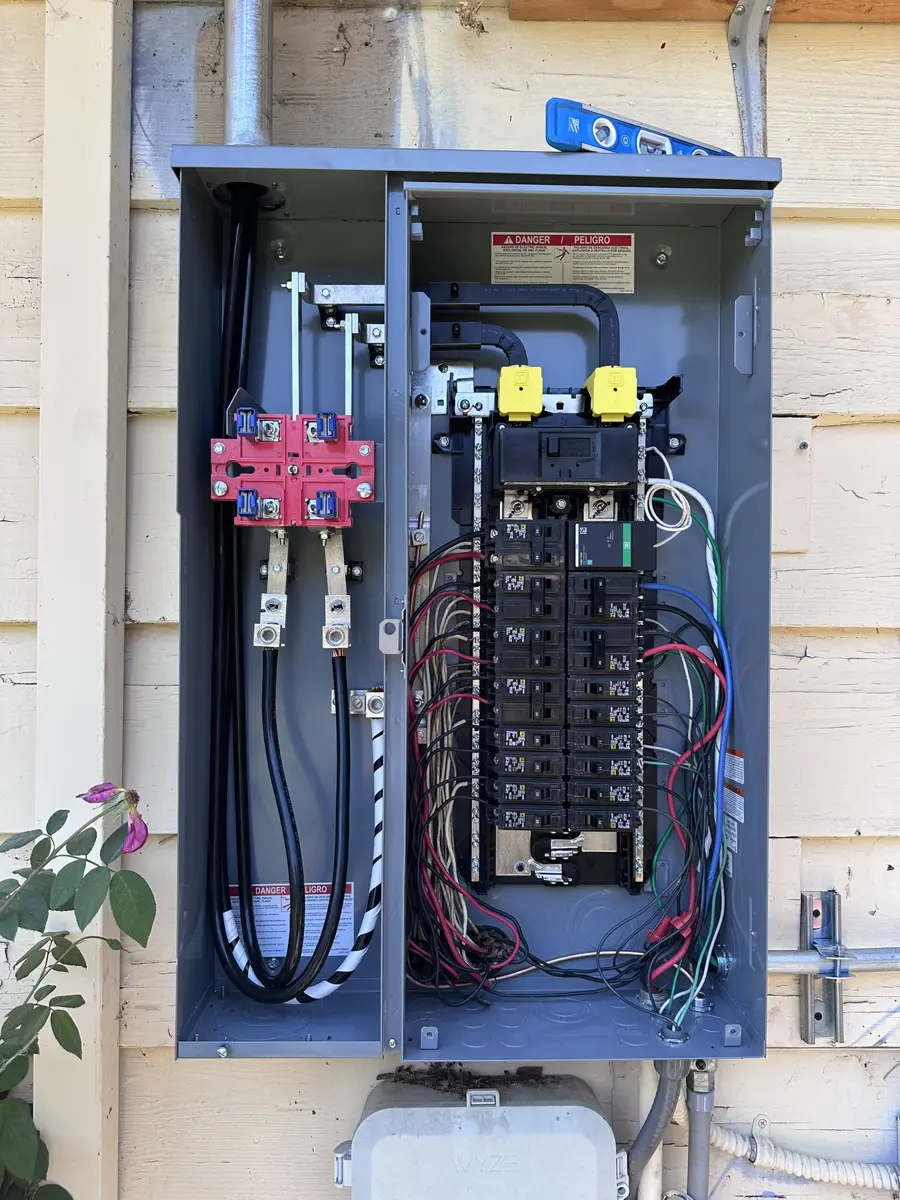
Service panel with the cover off and a level resting on the enclosure during a check

Available 24 hours

Licensed C-10 · CSLB #1115460

Emergency electrical
9 sections
  1. At a glance
  2. How it works
  3. Service and panel
  4. Grounding and GFCI
  5. Wiring type
  6. Rooms and additions
  7. Hazards
  8. Permits and insurance
  9. What the report says

An older Sacramento house does not need a full rewire simply because it is old, but age changes what you should verify before you buy. A 1920s bungalow, a 1950s ranch, a 1970s subdivision house, and a 1990s remodel can all have very different electrical systems — even if they look similar from the outside. A good pre-purchase electrical inspection should help you separate harmless age, outdated but serviceable equipment, isolated repairs, deferred maintenance, safety defects, near-term upgrades, and major rewiring or service work. That distinction can materially affect purchase negotiations, renovation budget, insurance, move-in timing, and whether planned electrification projects are realistic.

Do not ask only whether the electrical system is “up to code.” Ask what is actually in the house, what is damaged, what is merely old, and whether the likely work is one repair, a panel, or a rewire.

Pre-purchase electrical inspection at a glance

CheckWhy it matters
Service amperage60A / 100A / 125A / 150A / 200A — not house size
Panel manufacturer and conditionFederal Pacific, Zinsco, overheating, incompatible breakers
Grounding and ungrounded receptaclesTwo-prong vs fake three-prong vs GFCI-labeled
Wiring typeNM, cloth, knob-and-tube, aluminum, mixed generations
GFCI / AFCIOften a contained upgrade, not a rewire
DIY / additions / detached structuresLater work may be the real defect
Permit historyUseful evidence, not proof the whole house is correct
Future loadsEV, induction, heat pump can change whether 100A is enough

After the inspection, you should know whether the likely work is one device repair → one circuit repair → partial rewire → panel work → service upgrade → broader rewiring. The most important part is not a checklist. It is the scope conclusion.

How a pre-purchase electrical inspection works

A competent home inspector can identify many visible electrical issues, and that is valuable. A general home inspection is not the same as having an electrician evaluate circuit condition, panel compatibility, service capacity, branch wiring type, hidden remodeling patterns, and likely repair scope. If the house is older or the general inspection raises electrical questions, a targeted electrician inspection before contingencies expire can give much more useful information.

Older Sacramento housing can contain multiple generations of electrical work in one house. You may find original two-wire circuits, newer grounded kitchen wiring, remodeled bathroom circuits, an old panel replaced in the 1990s, a newer EV or HVAC circuit, garage wiring added later, and DIY receptacles from another era. The electrical system may not have one consistent “age.” The house might be a 1940s structure with 1960s wiring changes, an 1980s panel, a 2018 kitchen circuit, and unpermitted garage additions. The inspection should reconstruct that history as far as the visible evidence allows.

Service, panel, and future capacity

Start with how much electrical service the home actually has. Common residential sizes are 60A, 100A, 125A, 150A, and 200A. Do not infer service size from house size, age, or breaker count, and do not assume that 100A is inadequate — a 100A service can still be perfectly usable in a house with modest electrical loads. What matters is service condition, calculated load, and future plans.

Future plans can change whether the existing service is adequate. Possible added loads include a Level 2 EV charger, induction range, electric dryer, heat-pump water heater, heat-pump HVAC, spa, sauna, or workshop equipment. If the house is mostly gas today but you intend to electrify several appliances, the service should be evaluated with that future load in mind. Buying first and discovering later that the renovation plan requires service work can change the project budget substantially.

Panel rating and service size are not always the same thing. A panel marked 200A does not automatically prove the home has a 200A utility service. A main breaker may be 100A, 125A, or 200A. The electrician should identify the actual service configuration; do not use the panel label alone as proof of available capacity.

The panel brand matters. Some older electrical panels deserve more scrutiny than ordinary modern equipment, including Federal Pacific Electric / Stab-Lok and Zinsco / Sylvania-Zinsco. If one is present, the inspection should evaluate the exact equipment, breaker condition, bus condition, overheating, available replacement components, and prior modifications. Do not jump from “Federal Pacific” to “the house is unsafe and must be rewired.” Panel replacement and house rewiring are different decisions. Obsolete or problematic panel equipment can still materially affect insurance, repair options, and upgrade budget.

A newer panel is reassuring only if the installation is good. The electrician should still look for loose terminations, mismatched breakers, double-tapped terminals where not allowed, missing filler plates, corrosion, damaged bus, overheating, improper neutral/ground bonding, poor labeling, and crowded wiring. A newer panel can contain poor work. A clean older panel can sometimes be in better condition than a badly altered newer one.

Heat or arcing damage is a condition issue, not cosmetic age. Possible signs include a darkened breaker body, melted plastic, a scorched bus connection, burning odor, cracked breaker housing, discoloration, and heat damage around conductors. That deserves a much higher priority than a panel simply being old.

A breaker that physically fits is not automatically approved for the panel. Verify listed breaker type, manufacturer compatibility, and panel labeling. Improvised or incompatible breaker substitutions can indicate DIY work, difficult-to-source obsolete components, or poor previous repairs.

Double tapping means more than one conductor on a terminal that may be listed for only one, which can create a poor connection. Some breaker models are specifically listed for more than one conductor; others are not. The inspection should identify the breaker model, terminal listing, and actual connection. Do not treat every two-wire breaker connection as automatically defective without checking the device.

Look for subpanels in a garage, laundry, addition, or workshop. Check feeder size, neutral/ground separation, breaker compatibility, labeling, and condition. A subpanel is not inherently a problem. Poorly installed subpanels are.

Breaker space is not service capacity. Space matters if you plan to add an EV charger, induction range, heat pump, electric dryer, spa, sauna, or ADU. Open breaker spaces do not prove the electrical service has capacity, and a full panel does not automatically mean the service is overloaded. Separate physical breaker space from electrical service capacity.

Ask for a load calculation if future electrification matters. That can answer whether the house is likely to need no service work, a subpanel, panel replacement, load management, or a service upgrade — much more useful than a generic statement like “This house only has 100 amps.” A 100A service is not automatically a defect. It can be adequate for many homes and becomes more limiting when the house has or will add several large loads — electric range, electric dryer, electric water heater, heat pump with resistance backup, EV charger. If the home is mostly gas and you plan to keep it that way, 100A may be entirely workable. If you plan aggressive electrification, it deserves closer calculation.

Panel replacement and service upgrade are different projects. Panel replacement can mean replacing the electrical panel while keeping the same service size, for reasons such as obsolete equipment, damaged bus, lack of breaker compatibility, or poor condition. A service upgrade increases available electrical capacity, for example 100A → 200A, and can involve service conductors, meter equipment, utility coordination, grounding, and the panel. Do not let a pre-purchase inspection collapse these into one vague recommendation.

Grounding, GFCI, and AFCI

The electrical system should have a proper grounding and bonding arrangement. The inspection can include the grounding electrode system, service bonding, neutral/ground separation in subpanels, and equipment grounding paths. Older homes can contain combinations of grounded newer circuits, ungrounded original circuits, metal raceway systems, and later grounding additions. The goal is to identify what protection is actually present.

A three-prong receptacle does not prove the circuit is grounded. Someone may have replaced an old two-prong receptacle with a modern three-prong receptacle without adding a proper equipment ground. A plug-in tester may then show an open ground. Possible conditions include original ungrounded wiring, a broken grounding path, or an improperly installed replacement receptacle. The face of the outlet tells you very little.

Ungrounded outlets do not automatically mean full rewiring. Options can include maintaining an appropriate two-prong configuration, installing GFCI protection with required labeling where allowed, adding an equipment grounding conductor, or replacing branch wiring. The best option depends on circuit condition, accessibility, electronics, surge-protection needs, and remodel plans. If the house has many ungrounded circuits and you already plan major renovation, rewiring may make more sense. If only a few circuits are involved, the scope can be much smaller.

Two-prong receptacles are a strong clue that the circuit may be ungrounded, but they can also be an honest representation of the wiring system. In some ways that is better information than a three-prong replacement that falsely suggests grounding. The inspection should determine whether grounding exists, whether GFCI protection has been added, and what upgrade options make sense.

A three-light receptacle tester is a screening tool, not a complete electrical inspection. It can reveal an open ground, an open neutral, and some reversed connections. It cannot prove conductor condition, the quality of every splice, a correct grounding path, the absence of a bootleg ground, or full circuit safety.

A bootleg ground improperly connects the neutral to the grounding terminal at a receptacle or downstream device to make a tester appear normal. This can create dangerous conditions, and a simple plug-in tester may not identify every such improper connection. Older homes with suspiciously “perfect” three-prong outlets but no visible grounding path deserve closer investigation.

Missing GFCI is often a relatively contained upgrade. Older homes may lack modern GFCI protection in bathrooms, kitchens, garages, outdoors, laundry, and basements or crawlspaces where applicable. It does not by itself imply the house needs a rewire. It should still be documented, because remodel work and device replacements can trigger current protection requirements.

AFCI protection is much newer than GFCI. Many older homes were built before AFCI requirements existed, and that alone does not mean the entire house must immediately be retrofitted. The more useful question is which circuits are likely to be altered, extended, replaced, or remodeled. Current code requirements can apply when work is performed, so if you plan a major remodel, existing AFCI status becomes part of the renovation scope.

Wiring type and era

Identifying the branch wiring type is one of the most important parts of an older-home electrical inspection. Possible systems include modern NM cable, older NM cable, cloth-covered cable, knob-and-tube, metal conduit, armored cable, aluminum branch-circuit wiring, and mixed systems. Wiring type alone does not give the full answer. The inspection should also evaluate insulation condition, splices, terminations, grounding, physical damage, and modifications.

Cloth wiring is not one single wiring system. “Cloth wiring” is often used too broadly. Cloth may describe the outer covering or conductor insulation of several historical wiring types, and possible conditions range from intact older cable to brittle insulation, crumbling conductor covering, and damaged terminations. The important question is condition. Do not assume that cloth visible means a whole-house rewire is required. Brittle or deteriorated insulation can still materially change the answer.

Knob-and-tube deserves specific evaluation. It can still exist in very old Sacramento homes. The inspection should determine whether it is active, how much remains, whether it has been modified, whether insulation has been added around it, whether extensions were done properly, and whether grounding is needed for planned loads. Knob-and-tube can become especially important for insurance, remodel plans, attic insulation, and electronics. Do not let a seller’s statement that it was “all replaced” substitute for verification.

Aluminum branch-circuit wiring should be identified. Some homes built or modified in the 1960s and 1970s may contain solid aluminum branch-circuit conductors. The U.S. Consumer Product Safety Commission has long warned that aluminum branch wiring connections can develop dangerous overheating when connections deteriorate, and specifically recommends evaluation by a qualified person rather than homeowner inspection or repair. The electrician should determine whether aluminum branch wiring exists, which circuits use it, connection methods, evidence of overheating, and whether previous remediation was performed. Do not confuse this with modern large-gauge aluminum service or feeder conductors. They are different issues.

CPSC trouble signals associated with aluminum wiring problems include unusually warm cover plates, burning-plastic odor, smoke, sparking, and intermittent circuit behavior. Any of those deserves prompt investigation. For a buyer, evidence of prior overheating is more important than the word “aluminum” by itself.

Next step

Have the electrical looked at before you close

Send the address, the year if you have it, and any inspection or insurance notes. Photographs of the panel with the door open help.

Rooms, additions, and exterior systems

Look for DIY electrical additions. Older houses often accumulate work that never appears in the original plans. Clues include mismatched receptacle heights, surface-mounted cable, exposed splices, unusual junction boxes, extension cords used permanently, mixed wiring methods, unlabeled added breakers, wiring through cabinets, garage circuits that look newer than the house, and backyard structures with questionable power. These clues do not prove the work is unsafe. They indicate areas worth tracing.

Garage and workshop wiring deserves its own check. Garages often receive later additions — freezer, garage door opener, power tools, EV charger, compressor, lighting, subpanel. Inspect receptacle protection, circuit capacity, subpanel wiring, extension-cord dependence, exterior conduit, and grounding/bonding. If you plan to add an EV charger, the garage electrical system becomes especially important.

Detached structures need separate attention. A detached garage, shed, studio, or ADU may have a feeder, subpanel, underground wiring, and grounding requirements. Do not assume power to a detached structure was permitted or sized appropriately. If the property has a backyard office or converted garage, inspect that electrical scope independently.

The kitchen is a load clue. An older kitchen can reveal how much electrical modernization has already occurred. Check whether it has adequate small-appliance circuits, grounded receptacles, GFCI protection, dedicated appliance circuits, a microwave circuit, dishwasher/disposal wiring, and an electric range circuit if applicable. A cosmetically renovated kitchen with old electrical infrastructure can be more expensive to correct later because finished cabinets and tile block access.

Bathrooms can reveal mixed generations of work. Look for GFCI protection, grounded receptacles, exhaust fan, lighting condition, heater/fan combinations, and recent remodel work. A bathroom may have new finishes but older branch wiring. If the remodel appears recent, permit history can help clarify what was officially inspected.

Walk the exterior. Look at outdoor receptacles, weatherproof covers, exterior lighting, pool/spa equipment, AC/heat pump disconnects, solar equipment, garage wiring, and irrigation equipment. Outdoor electrical work is more exposed to moisture, corrosion, UV, and physical damage.

Solar changes the inspection. If the house has solar, document inverter type, interconnection, disconnects, panel modifications, and any battery system. Solar does not automatically increase the home’s usable service capacity, and a panel modified for solar may have special bus or breaker considerations. If you plan an EV charger or electrification project, include the solar equipment in the electrical review.

A home battery changes the electrical topology too. It may have a backup loads panel, transfer equipment, a gateway, and critical-load circuits. Identify what is backed up, what is not, and whether modifications were permitted. Do not assume the whole house is on backup because a battery is present.

Hazards that change the priority

Worn devices and loose connections show up as loose plugs, cracked devices, discoloration, warm cover plates, buzzing, switches that spark, outlets that move in the wall, and intermittent power. Those can indicate a worn device, a loose connection, damaged wiring, or poor box mounting. One worn receptacle is a small repair. Repeated patterns across the house can indicate broader aging.

Flickering and intermittent power matter more than age alone. During a showing or inspection, pay attention to lights flickering, one room losing power, dimming when loads start, outlets that work intermittently, and breakers that trip. The cause could be a loose connection, an overloaded circuit, a failing breaker, a neutral problem, or a service issue. Document where and when it happens.

Burning smell or hot electrical equipment is no longer a normal pre-purchase modernization question. If there is a burning odor, a hot receptacle, a hot panel, crackling, visible arcing, or melted plastic, that is an active defect that deserves immediate evaluation. The purchase decision should account for the repair before assuming normal occupancy.

Permits, historic properties, and insurance

Check permit history where possible. It can help answer whether a panel replacement, major rewire, kitchen remodel, HVAC change, new electrical circuit, or garage conversion was permitted. The City of Sacramento provides a Public Permit Portal where the public can view building permit records and statuses. Permit history is useful evidence. It is not absolute proof that every part of the house is correct.

No permit record does not automatically prove illegal work. Records can be incomplete, especially for older work, and some minor historical work may predate modern digital records. Treat missing permit history as a reason to inspect more carefully, not automatic proof of a violation. Likewise, a permit found does not guarantee nothing changed later. Use both records and physical inspection.

Sacramento permit history is especially useful for panel and rewire work. The City currently treats main/sub service panels, rewire work, and new electrical circuits as residential electrical minor-permit scopes. Current City guidance also states that whole-house rewires, panel changeouts, and electrical circuits generally do not require conventional residential plan review. That means permitted work may exist even without a large plan set. Look for the permit record and inspection status.

Historic properties can have additional considerations. Sacramento has many older neighborhoods and properties with historic status or historic context. The City’s current residential electrical permit forms include a specific HVAC/Electrical/Solar Equipment for Historic Properties form. If the property is historically designated, electrical upgrades may require additional siting or appearance considerations for equipment such as service panels, exterior conduit, HVAC equipment, and solar.

Ask whether a panel replacement would be visually constrained. On some historic or architecturally sensitive homes, the easiest electrical location may not be acceptable visually. That can affect labor, conduit route, and meter/panel location. If a service upgrade appears likely, investigate this before closing.

Home insurance can care about electrical equipment. Insurance underwriting varies by company. Some insurers may ask about panel brand, knob-and-tube, aluminum wiring, service size, and electrical updates. Do not assume a particular system automatically makes the house uninsurable. But if the inspection finds Federal Pacific, Zinsco, active knob-and-tube, or aluminum branch wiring, ask the insurer before closing whether it changes eligibility, conditions, or premium. That is much better than discovering the issue after ownership transfers.

What electrical work commonly requires permits after purchase? Current City of Sacramento guidance lists residential electrical minor work including main and sub service panels, rewire work, and new electrical circuits, and states that these minor residential electrical scopes generally do not require conventional plan review. That means a house with needed electrical work is not necessarily facing a large architectural plan-review process. But minor permit does not mean no permit.

What the inspection should tell you

Do not ask the electrician to “pass or fail” the house. A useful pre-purchase inspection should not reduce the house to good or bad. You need a prioritized scope, with findings grouped as immediate safety / active defect (overheating, arcing, exposed live parts, severe panel damage); near-term repair (failed devices, damaged GFCI, loose connections, improper subpanel bonding); modernization (missing GFCI protection, ungrounded circuits, outdated panel); and future-project constraint (limited service capacity, no EV-ready circuit, a full panel). That structure makes the report useful in a purchase decision.

A useful inspection estimates scope, not just a defect list. A weak report says “old panel, ungrounded outlets, wiring outdated, recommend electrician.” A useful report says: 100A service; panel is mechanically sound but an obsolete breaker family; six original ungrounded bedroom/living circuits; remodeled kitchen is grounded and GFCI-protected; no overheating observed; an EV charger would require a load calculation; likely near-term scope is panel replacement plus selective branch-circuit upgrades, not a whole-house rewire. The second report helps you budget.

A broader rewire becomes more reasonable when several systemic conditions appear together — widespread deteriorated insulation, active knob-and-tube throughout, numerous ungrounded circuits plus major remodel plans, repeated unsafe modifications, widespread aluminum branch wiring needing substantial remediation, many failing connections, or circuit capacity fundamentally mismatched to current use. A house should not be declared a full-rewire project merely because it is 70 years old, it has two-prong outlets, or one breaker trips. The evidence should support the scope.

Partial rewiring can be appropriate when one remodel area is open, kitchen circuits need modernization, one bedroom wing is still ungrounded, damaged wiring is localized, or one addition contains poor work. That can be much more economical than replacing every branch circuit in the house. Potentially contained repairs include one failed receptacle, one GFCI replacement, one breaker replacement, one loose splice, one damaged switch, one fan-rated ceiling box, or one new dedicated circuit. Do not let a long inspection list make every item sound equal.

Higher-cost findings are the ones most useful to know before closing: service replacement; panel replacement plus service work; extensive knob-and-tube; widespread aluminum remediation; whole-house rewiring; underground feeder replacement; detached-building electrical reconstruction; large-scale unpermitted additions. For material findings, ask for repair estimates before buying. A realistic estimate is much more useful than a generic inspection note. “Federal Pacific panel” does not tell you whether the scope is panel replacement at the same service size, a full 200A upgrade, or service relocation. Those can be materially different projects. The site conditions determine the cost.

Ask the electrician, in this order:

  1. What wiring systems are present?
  2. Which circuits are grounded?
  3. Is there active aluminum branch wiring?
  4. Is there active knob-and-tube?
  5. Is the panel in good condition?
  6. Is the panel obsolete or difficult to service?
  7. Are there signs of overheating or arcing?
  8. What is the actual service size?
  9. Is the service likely adequate for my planned loads?
  10. Are problems localized or systemic?
  11. What should be repaired before occupancy?
  12. What can reasonably wait?
  13. Does the house need partial or whole-house rewiring?
  14. What work would require permits?
  15. Are there clues of unpermitted electrical work?

By closing, those answers should have covered service amperage and the main breaker; panel manufacturer, breaker compatibility, overheating, corrosion, bus condition, breaker space, and any subpanels; grounding, bonding, ungrounded receptacles, GFCI, AFCI context, and outdoor or garage protection; visible branch wiring including cloth, knob-and-tube, and aluminum, plus DIY additions and accessible splices; kitchen, bathroom, laundry, HVAC, garage, exterior, detached structures, and EV potential; and permit history, insurance questions, and future electrification loads.

Electrical inspection before buying in Sacramento

Before buying an older Sacramento house, do not ask only whether the electrical system is “up to code.” That question is too broad to be useful. Ask what wiring is actually present, what is damaged, what is merely old, what lacks modern protection, what is likely to need work soon, whether the panel is serviceable, whether the service can support your future plans, and whether the likely scope is one repair, partial modernization, or major rewiring. The best pre-purchase inspection gives you a budget map, not just a defect list.

For a focused read on the system before you close, see electrical inspection. Litel Electric can inspect the service, panel, visible branch wiring, grounding, GFCI/AFCI protection, older wiring systems, remodel additions, and future load capacity, then separate immediate repairs from optional modernization and larger projects before you commit to the house. Call (279) 972-9272.

Pre-purchase electrical inspection FAQs

Is an electrical inspection worth it before buying an older Sacramento home?

Yes, especially when the house has older wiring, an older panel, ungrounded receptacles, remodel history, or planned electrification. It can clarify the likely repair scope before purchase.

Does an old house automatically need rewiring?

No. Age is a clue, not a diagnosis. Wiring type, insulation condition, grounding, modifications, and actual defects matter more.

Are two-prong outlets a deal breaker?

Not necessarily. They often indicate ungrounded circuits. The right solution can range from GFCI protection to adding grounding or rewiring, depending on the circuit and renovation goals.

Is a 100A service too small?

Not automatically. A load calculation should be used if you plan to add major electrical loads.

Should I avoid a house with Federal Pacific or Zinsco?

Those panels deserve specific evaluation and may justify replacement, but the decision should be based on the actual panel condition, repair options, insurance, and purchase economics.

What if the house has aluminum wiring?

Solid aluminum branch wiring deserves professional evaluation because connection deterioration can create overheating risk. CPSC specifically recommends qualified inspection rather than homeowner repair.

What if the house has knob-and-tube?

Determine how much is active, its condition, whether it has been modified, and how it affects insurance and planned renovation. Presence alone does not tell you the full scope.

Can a home inspector check all of this?

A home inspector can identify many visible concerns, but a licensed electrician can provide deeper circuit, panel, load, and repair-scope evaluation when the electrical system needs closer review.

Should I check permit history?

Yes. Sacramento’s public permit records can help verify panel replacements, rewires, circuits, remodels, HVAC work, and other changes.

Does a permitted panel replacement mean everything is good?

No. It is useful evidence that the work went through a permit process, but the rest of the house can still contain older or later-modified wiring.

Does a missing permit prove work was illegal?

Not automatically. Older records can be incomplete. Treat it as a reason for closer physical inspection.

Sources

Get estimate

Tell us what is happening, or what you are planning. We read the details, tell you what else we need to know, and explain the next step before anything is scheduled.

  1. 01

    You send the problem or the plan, with the address if you have it.

  2. 02

    We reply with what it involves and what has to be seen in person.

  3. 03

    Nothing is scheduled, and nothing is priced, until the equipment has been looked at.

License
CSLB #1115460 · C-10 electrical